What exactly is polyamide in DTF?
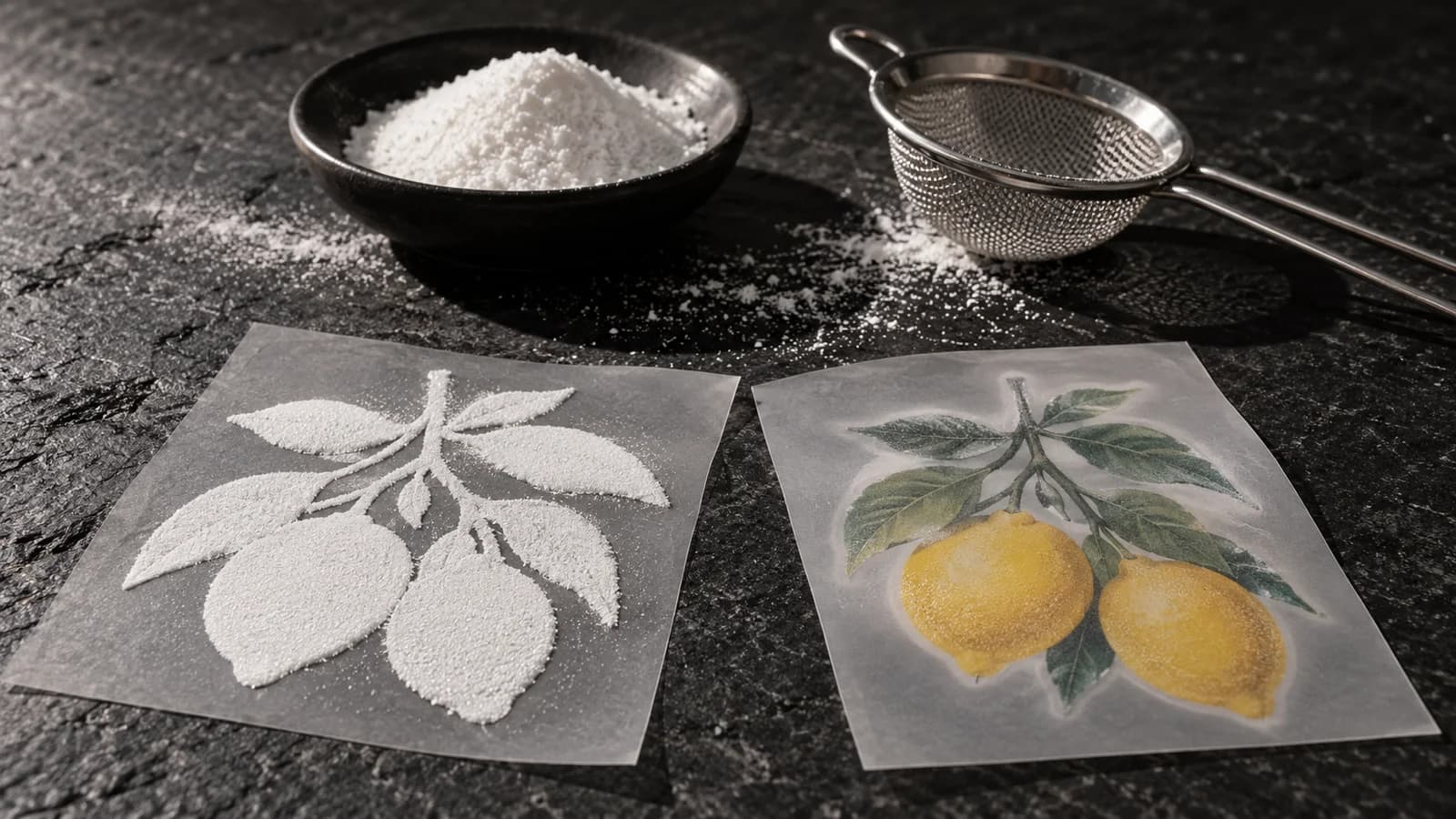
It is a powdered polymer (a hot-melt adhesive) applied over the freshly printed ink while it is still wet. In the tunnel oven it melts and forms a continuous layer bonded to the ink: that layer is what later, under the press, melts again and penetrates between the fibres of the fabric.
In the finished garment you can't see it: it sits between the ink and the cloth. But it defines three things you can feel — the stretch of the transfer, its wash resistance and its hand. A fine-grain, well-dosed polyamide gives a flexible transfer that moves with the fabric; too much gives a stiff patch that ends up cracking.
How is it applied during printing?
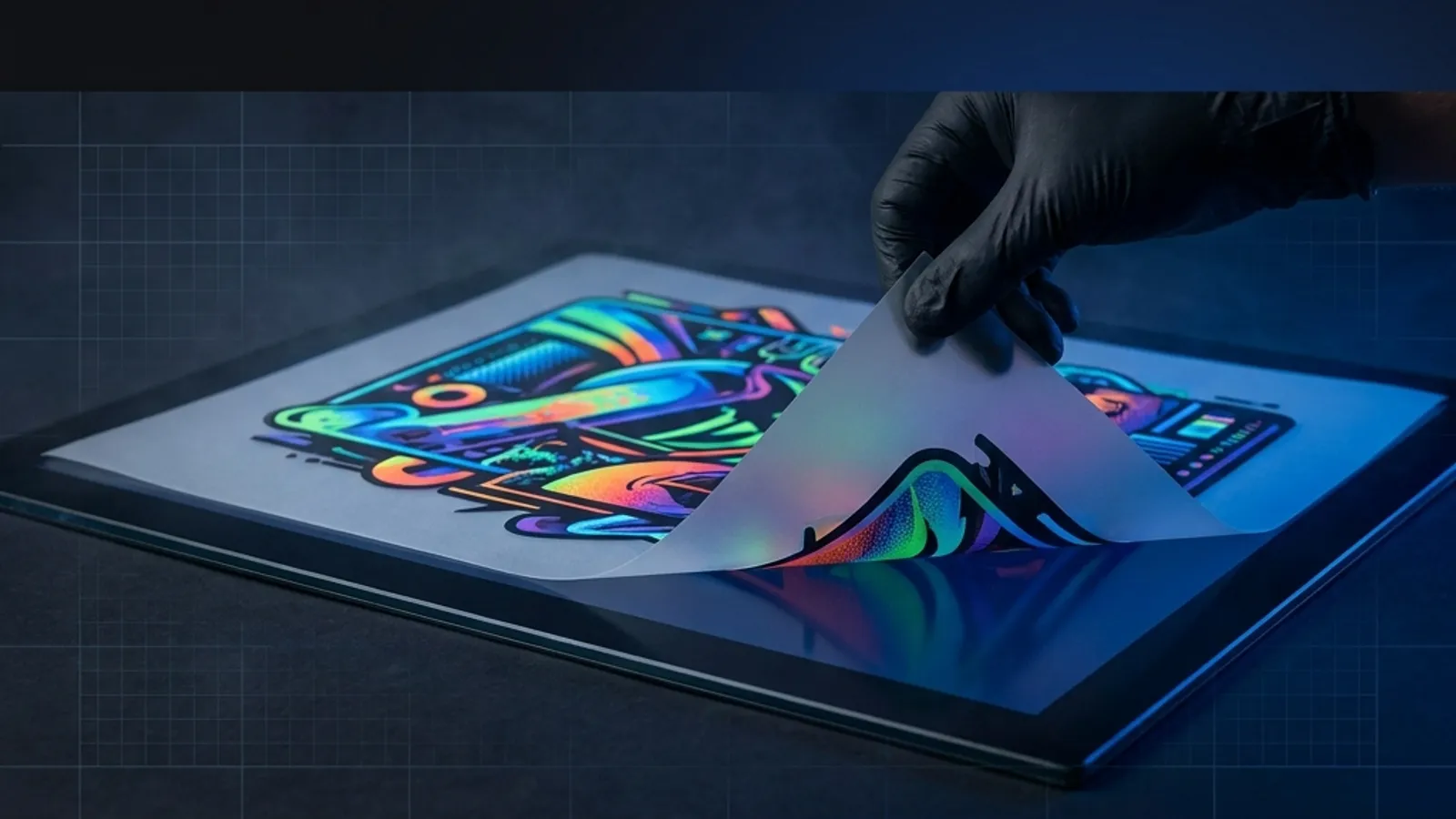
The workshop process is continuous: the printer lays the colour ink and the white layer onto the film, and on the way out the polyamide powder falls over the wet ink and sticks only where there is artwork. The excess is recovered — that is why the back of a good DTF is clean, with no loose powder outside the design.
The film then passes through the oven (around 2-3 minutes at 110-130 °C) where the polyamide gels without fully curing. That halfway point is key: it must be dry to the touch for storage, yet reactivable when pressed onto the garment.
- Fine grain (80-200 µm): more definition on small details and a softer hand.
- Medium grain: more adhesive body for textured fabrics (canvas, fleece).
- The back of the transfer should look matte and even: uneven sheen betrays too much powder.
Why does a DTF peel? It's almost always the polyamide
If a transfer lifts at the edges or cracks on the first wash, there are three usual causes: too little temperature when pressing (the polyamide never melted and merely 'rested' on the fabric), too little pressure (it melted but did not penetrate the fibres) or a water-repellent fabric, like many technical garments, that blocks adhesion.
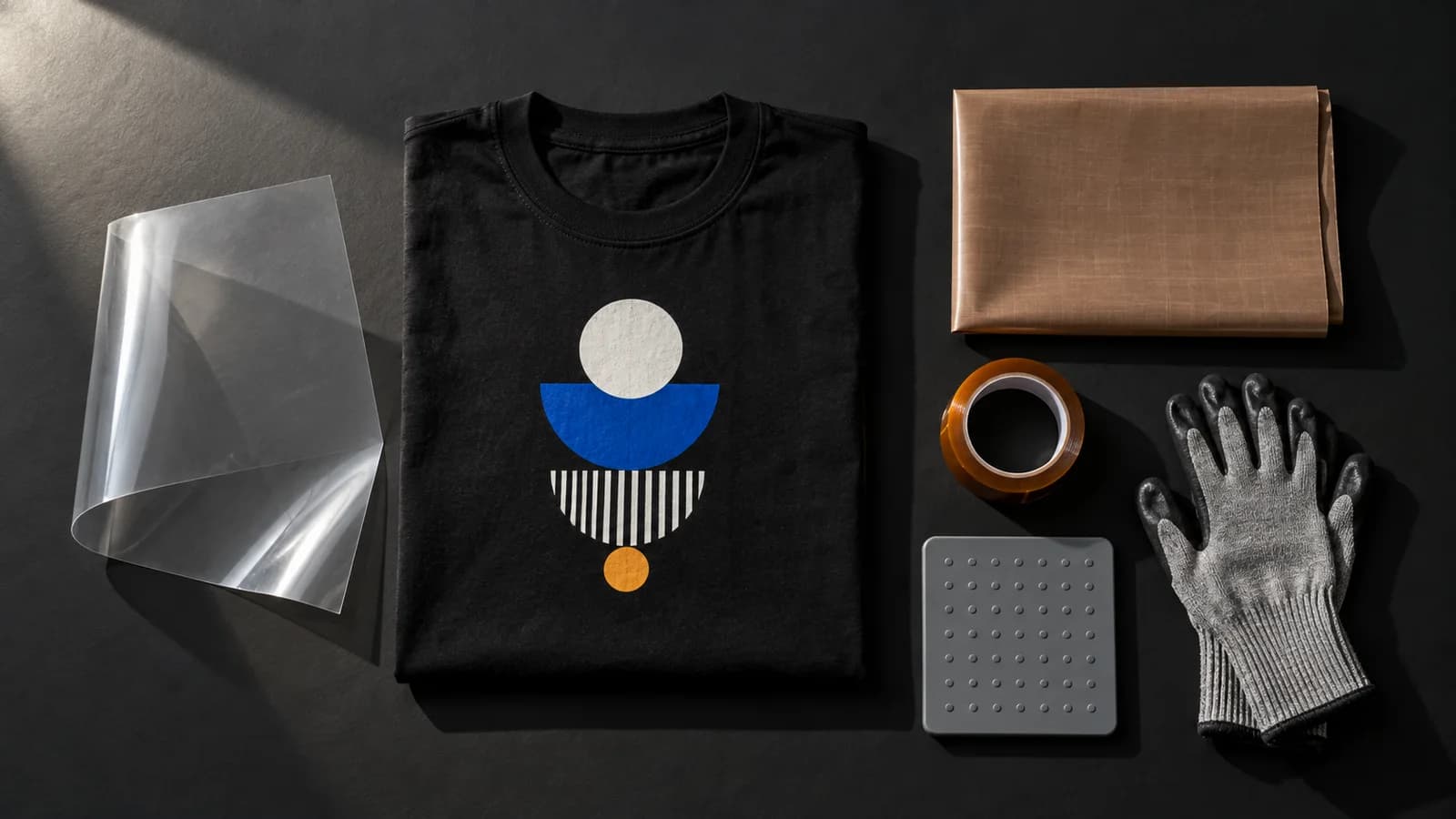
The test for a correct press is visual: after pressing and removing the film, the weave of the fabric should show faintly through the design. If the transfer stays smooth and 'floating' on the cloth, the polyamide did not anchor and that design will not survive the washing machine.
What we control at DTF.pro
We use fine-grain polyamide on matte film, with automatic dosing and excess recovery: the back comes out even and the transfer withstands more than 50 washes at 30 °C when applied at 130 °C for 8 seconds with medium-firm pressure.
Every gang sheet passes a visual check before dispatch: opaque white layer, no excess powder and clean edges. If a file arrives with strokes thinner than 1.5 mm — where the polyamide has no surface to grip — we flag it before printing.
How to care for polyamide once applied
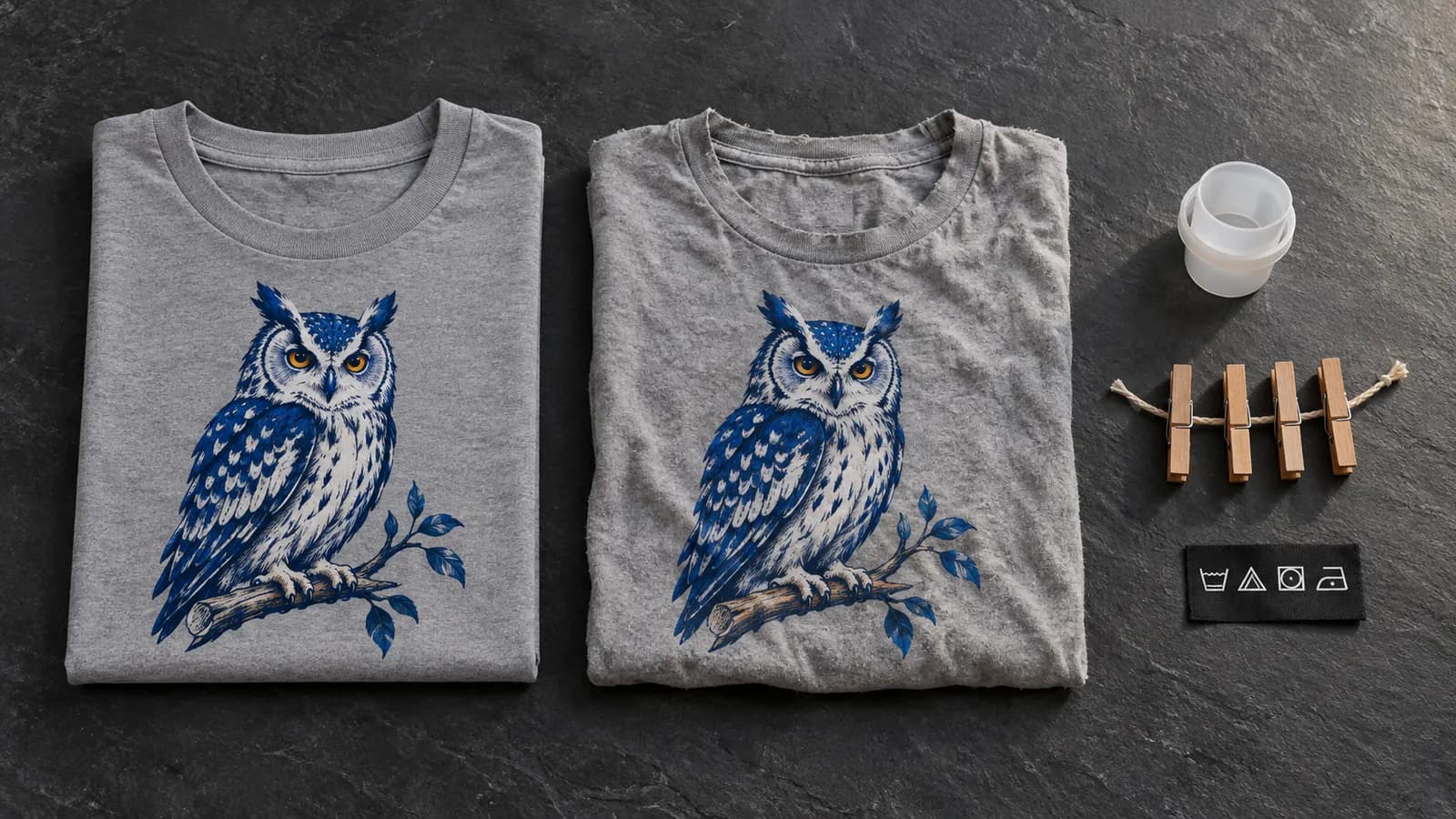
The classic DTF rules exist precisely because of the polyamide: wash inside out at 30 °C, don't tumble dry on high heat and never iron directly over the design. The adhesive stays hot-melt for life: above 120 °C it softens again, and a household iron pressed straight on it can drag the design.
Well applied and cared for this way, the polyamide-to-fabric bond usually outlasts the garment itself: in our wash tests the fabric loses colour before the transfer cracks.
- What it is
- Powdered hot-melt adhesive
- When it is applied
- Onto wet ink, before the oven
- Melts at
- 110-130 °C in the oven · reactivates under the press
- Correct application
- 130 °C, 8 s, medium-firm pressure
- Sign of good anchoring
- The weave shows through the design
- Expected durability
- 50+ washes at 30 °C, inside out