What DTF (Direct to Film) means
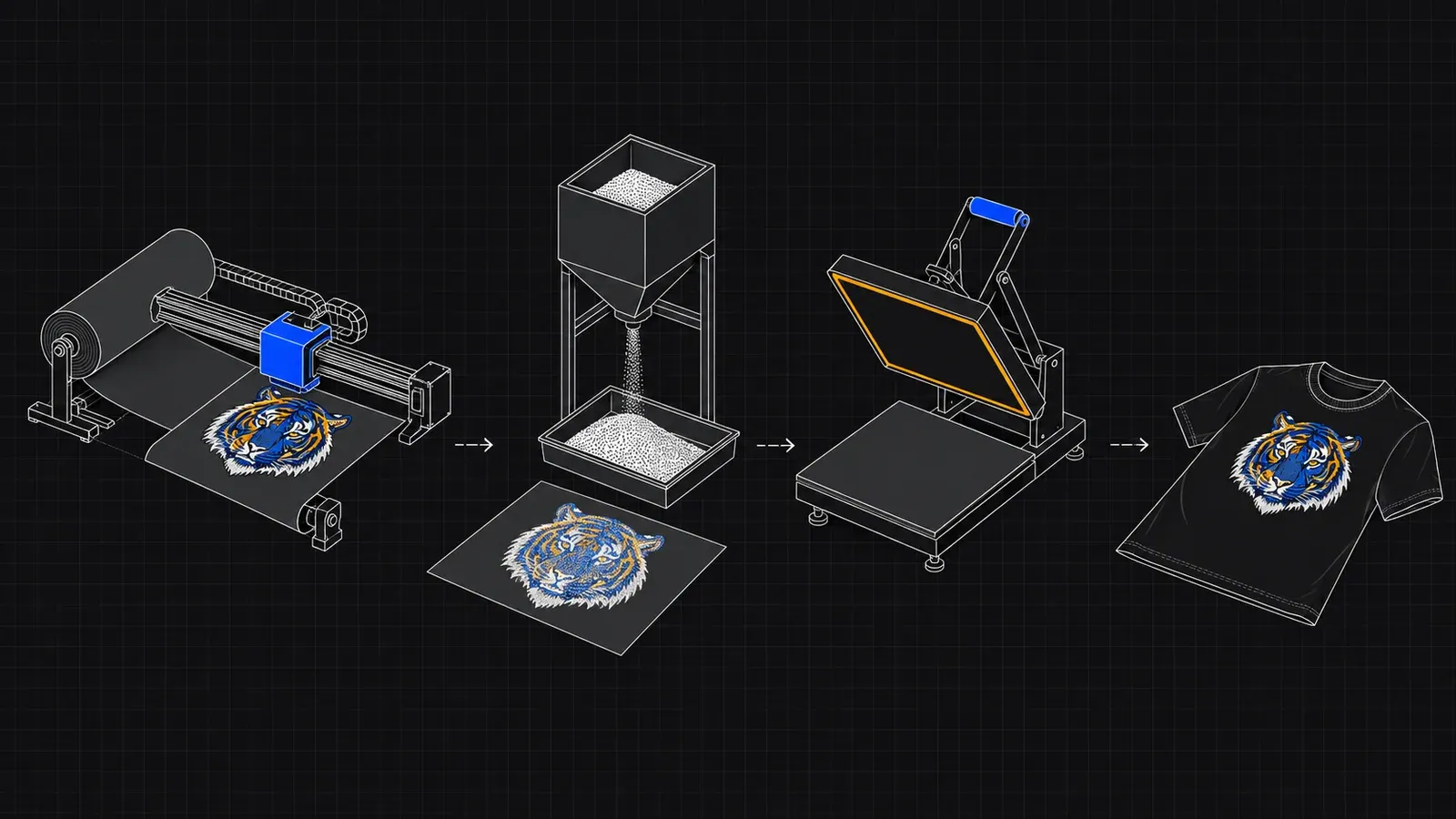
DTF stands for Direct to Film: the print goes directly onto a PET film instead of onto the garment. A hot-melt adhesive powder is applied over the ink and, when heat-pressed, bonds the design to the fabric. That is why it works on almost any garment colour and composition, with no screens and no vinyl to cut.
Unlike sublimation (which only dyes light polyester) or vinyl (one colour per layer), DTF reproduces photographs and gradients in full colour in a single pass.
How the process works step by step
The flow is always the same: the colour design is printed on the film, a white layer is printed underneath for opacity, the adhesive is dusted on and cured with heat. The result is a transfer ready to apply whenever you want.
- CMYK + white printing on the PET film
- Adhesive powder applied and cured
- Pressed onto the garment (130 °C, 8 s)
- Film peeled instantly, while hot
Which fabrics and garments it works on
DTF is very versatile: cotton, polyester, blends, technical fabrics and even dark garments thanks to the white layer. T-shirts, hoodies, caps, tote bags, workwear and sportswear are the most common supports.
Only on very heat-sensitive fabrics (fine nylon, waterproofs) is it worth running a test first, adjusting temperature and time.
Advantages over screen printing and vinyl
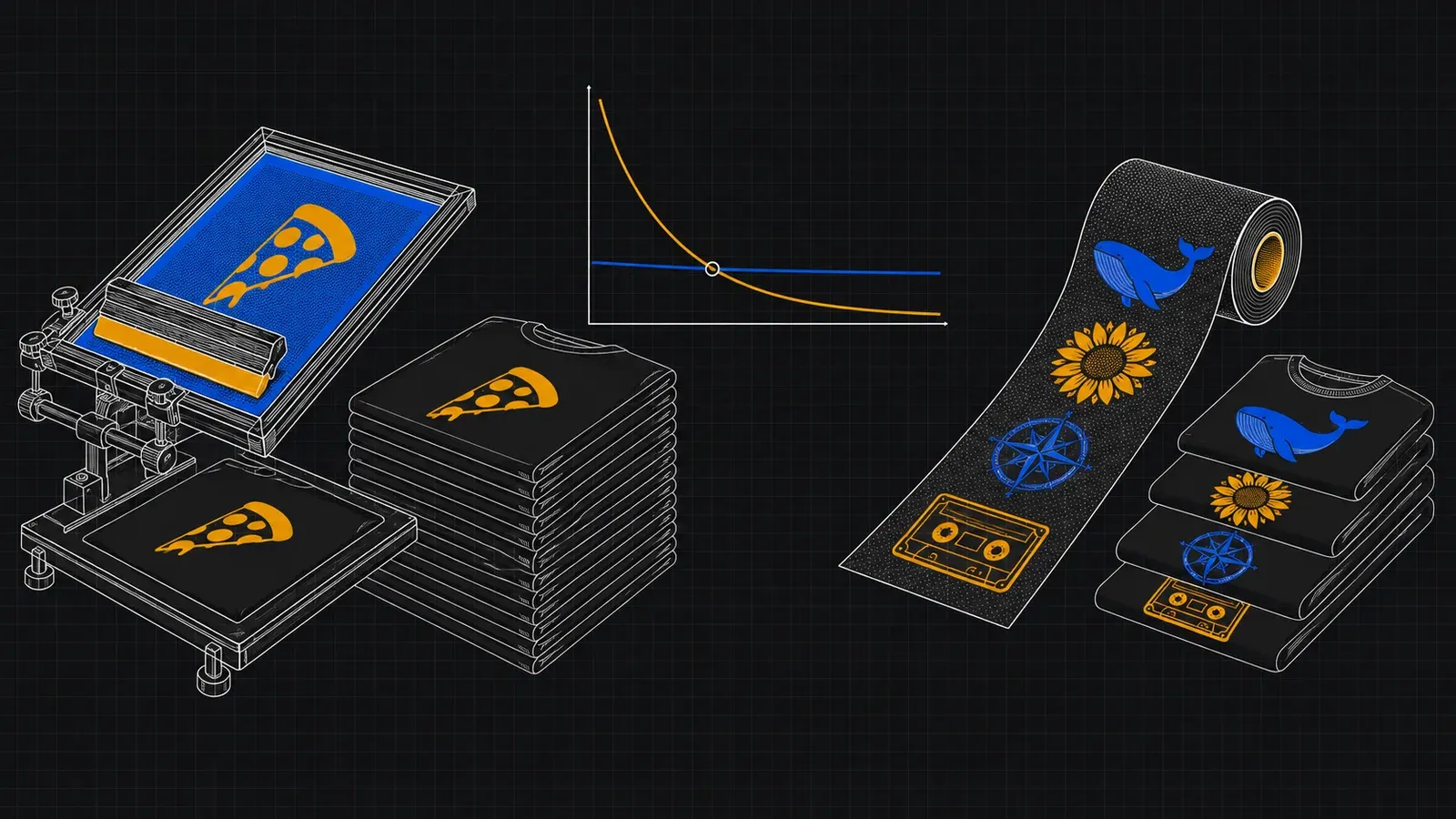
Compared with screen printing, DTF needs no screens or minimums: it pays off from a single unit and takes every colour at no extra cost. Compared with vinyl, it reproduces fine detail, photographs and gradients, with no need to weed each colour by hand.
- By the meter: minimum 1 m. A4/A3: minimum 2 sheets. Samples are ordered individually.
- Every colour and gradient in a single pass
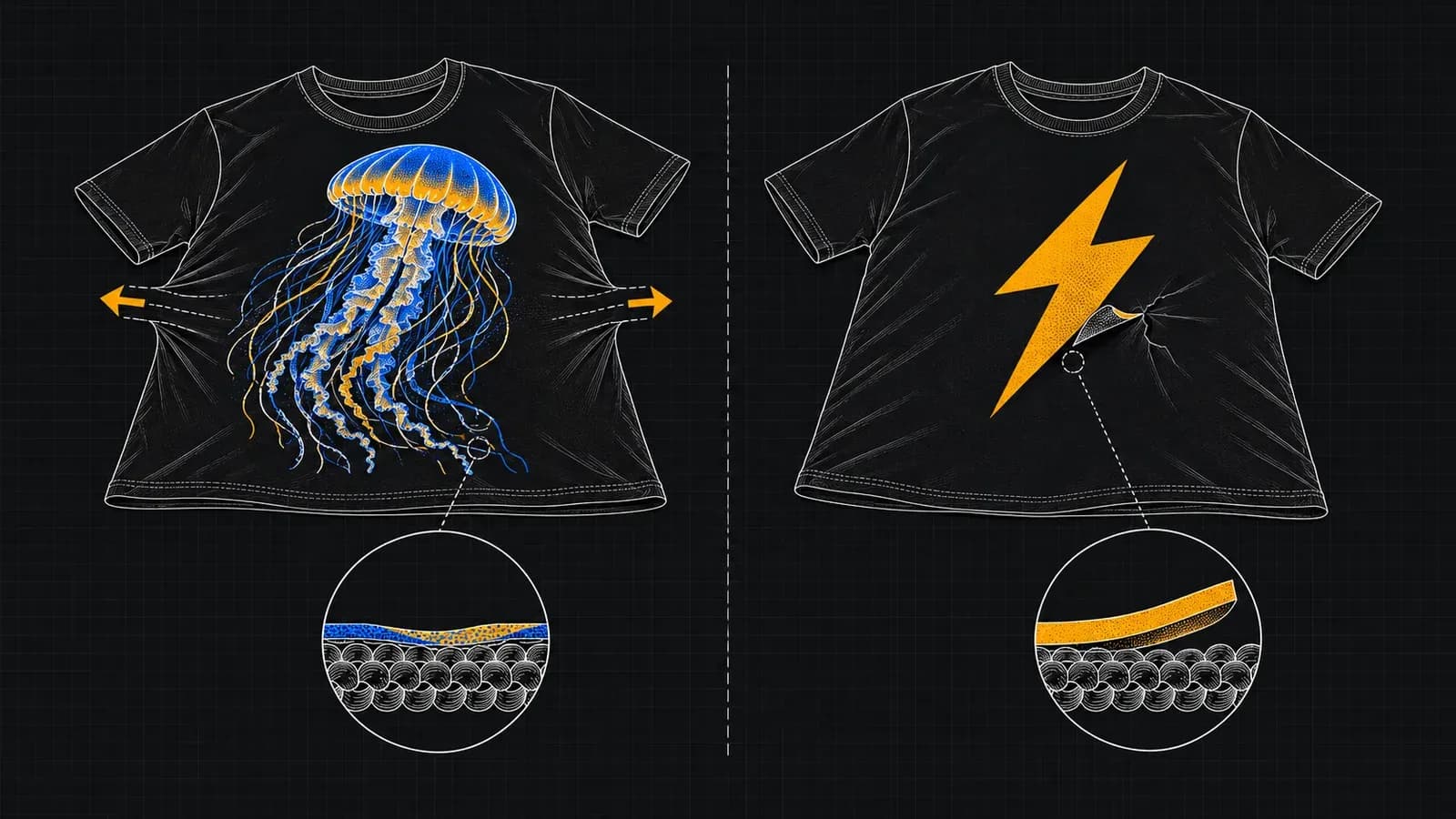
- Light, stretchy feel that moves with the garment
- Good durability: 50+ washes when well applied
Limitations and what it is NOT for
Textile DTF is made for fabric, not rigid surfaces: for glass, metal, plastic or wood you use UV DTF. On runs of thousands of single-colour units, screen printing can be cheaper per garment. And a badly prepared file (low resolution or no transparent background) ruins any technique.
If your design is for a bottle, a laptop or a hard surface, see our UV DTF stickers guide.
- Meaning
- Direct to Film
- Supports
- Cotton, polyester, blends, technical
- Colour
- CMYK + white, full colour in one pass
- Application
- Heat press 130 °C, 8 s
- Durability
- 50+ washes when well applied
- Minimum order
- By the meter: minimum 1 m. A4/A3: minimum 2 sheets. Samples are ordered individually.