What is FTS and how does it differ from DTF?
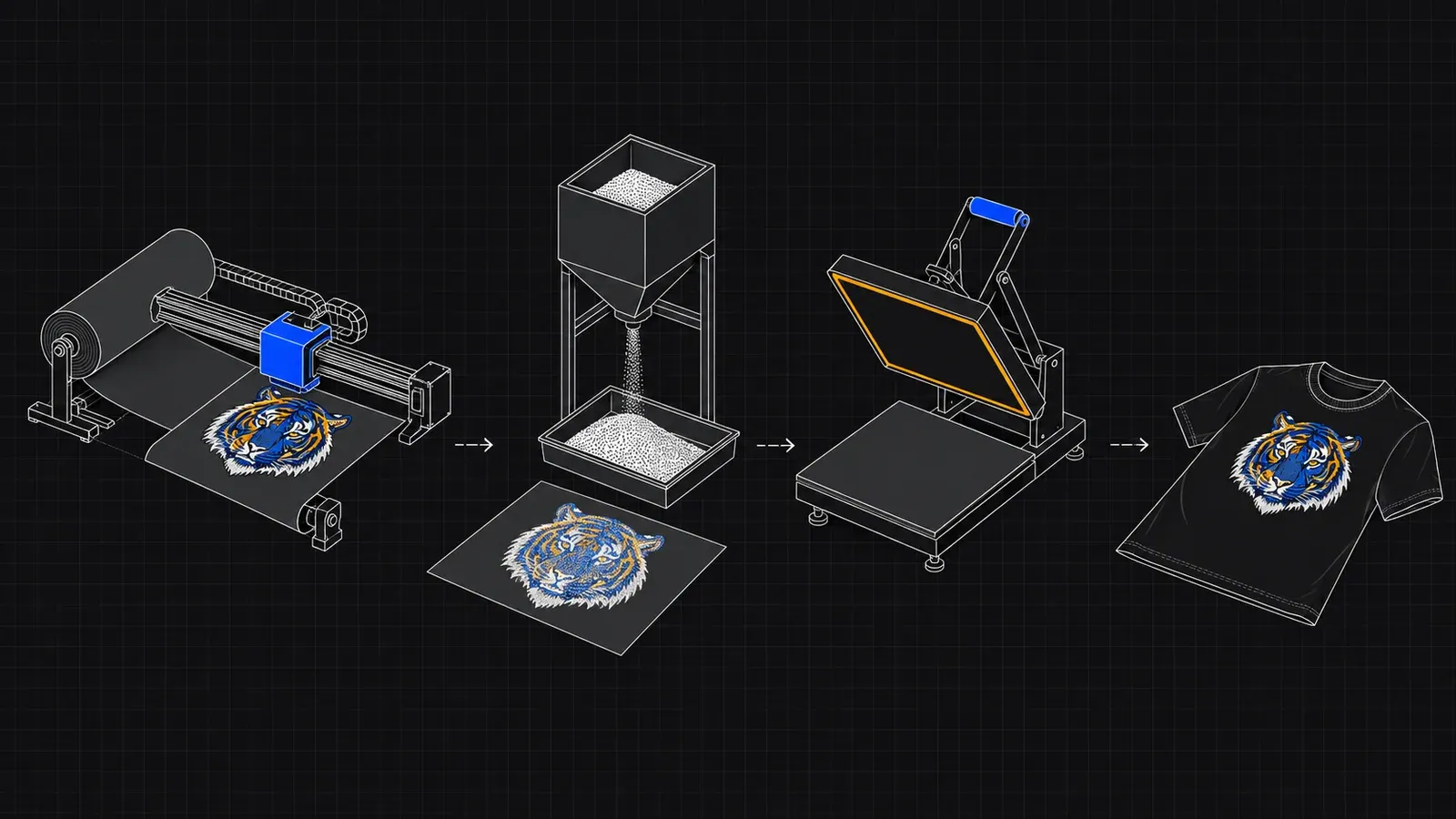
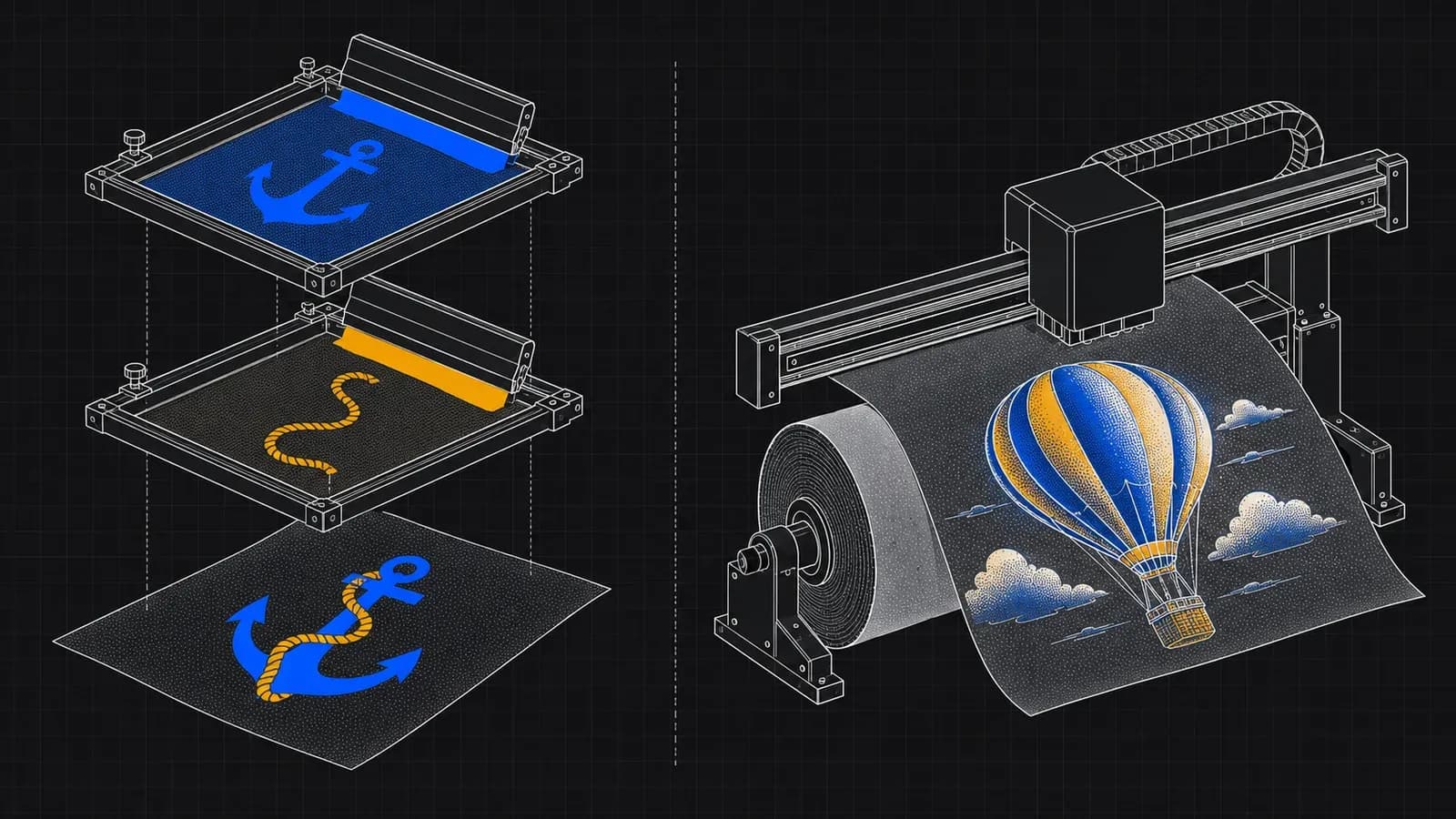
In FTS the design is flat screen-printed onto a silicone-coated film — one screen per colour, plastisol inks — and coated with adhesive. The customer receives a transfer applied with a press, just like a DTF. The difference is upstream: FTS carries the fixed costs of screen printing (screens, per-colour setup), while DTF is 100 % digital straight from the file.
That difference at the source explains everything: FTS only makes economic sense on medium or large runs of a single design with few flat colours; DTF prints any design from 1 unit, with gradients, photographs and unlimited colours, with no setup cost.
Feel and finish: where FTS is strong
The FTS finish is that of classic screen printing: plastisol ink with body, very dense flat colours and that slightly rubbery hand many brands associate with a 'shop-bought garment'. For corporate logos of 1-3 inks in long runs, it looks great.
Modern DTF has closed the gap: the hand is thin and flexible, and on multicolour or detailed designs DTF is simply in another league — FTS cannot reproduce a gradient or a photograph without pricing every colour as another screen.
Durability and stretch
Well applied, both exceed 50 washes. The plastisol in FTS is very abrasion-resistant but stiffer: on stretchy fabrics (sportswear, fine knits) it can crack sooner. The polyamide in DTF gives more stretch and behaves better on garments that flex.
On dark fabrics both use a white base; on water-repellent technical fabrics, neither escapes a prior test. A technical tie with a caveat: for stretchy sportswear, DTF.
Price: where the break-even point sits
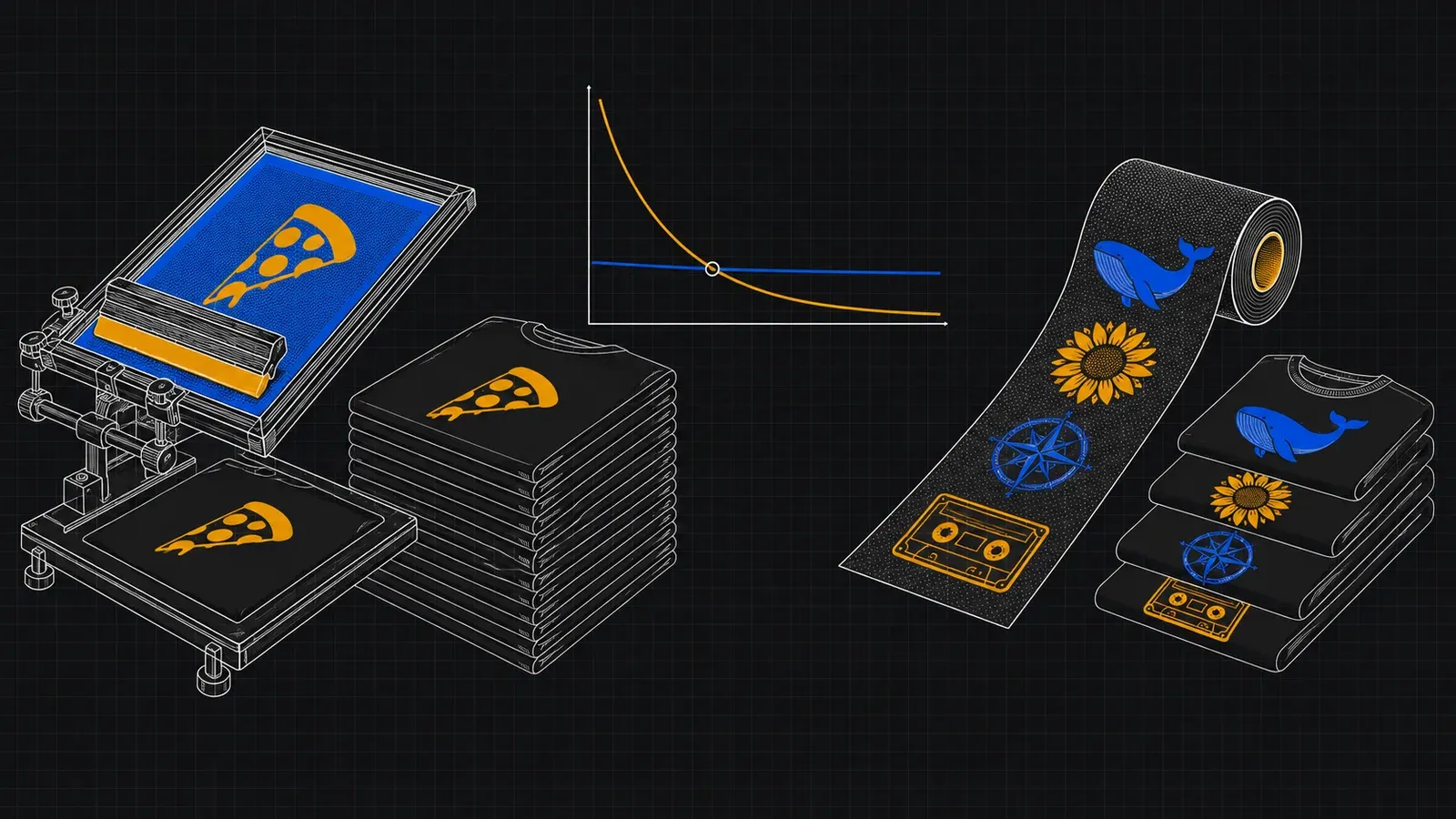
FTS charges for screens and setup: ordering 10 transfers of a 3-ink logo can cost more per unit than 100, because the setup is spread out. DTF costs the same per metre whether you print 1 design or 40 different ones: at €7/m ex VAT on a 60 cm roll, the cost per logo depends only on how much space it takes.
An honest rule of thumb: below ~100-200 units of the SAME design, or with more than 3 colours, or with several different designs, DTF almost always wins. Long runs of a simple 1-2 ink logo: get an FTS or direct screen-printing quote and compare.
- By the meter: minimum 1 m. A4/A3: minimum 2 sheets. Samples are ordered individually.
- FTS: a setup cost per colour, worthwhile only by repeating one simple design a lot.
- With photos, gradients or fine detail, FTS doesn't even compete.
So, which one do I order?
Dispatch requires confirmed payment and all files approved before 12:00, subject to the workshop calendar and capacity. Carrier transit starts after dispatch.
If you have ONE stable corporate logo, in 1-2 flat inks, and you'll print hundreds of identical garments a year, get an FTS quote and compare it with our price per metre: the numbers decide on their own.
- FTS
- Plastisol screen print transferred from film
- DTF
- By the meter: minimum 1 m. A4/A3: minimum 2 sheets. Samples are ordered individually.
- Colours
- FTS: per screen · DTF: unlimited
- Gradients and photos
- Only DTF reproduces them well
- FTS break-even point
- ~100-200 units of the same simple design
- DTF at DTF.pro
- After payment and file approval