Instant hot peel
Press at 130 °C for 8 seconds and peel the film off the moment you open the press, without waiting for it to cool.


What you need: heat press or household iron
A heat press is ideal because it spreads heat and pressure evenly. If you only have a household iron you can apply DTF on small pieces, but with more care: press in sections, no steam and a firm surface underneath.
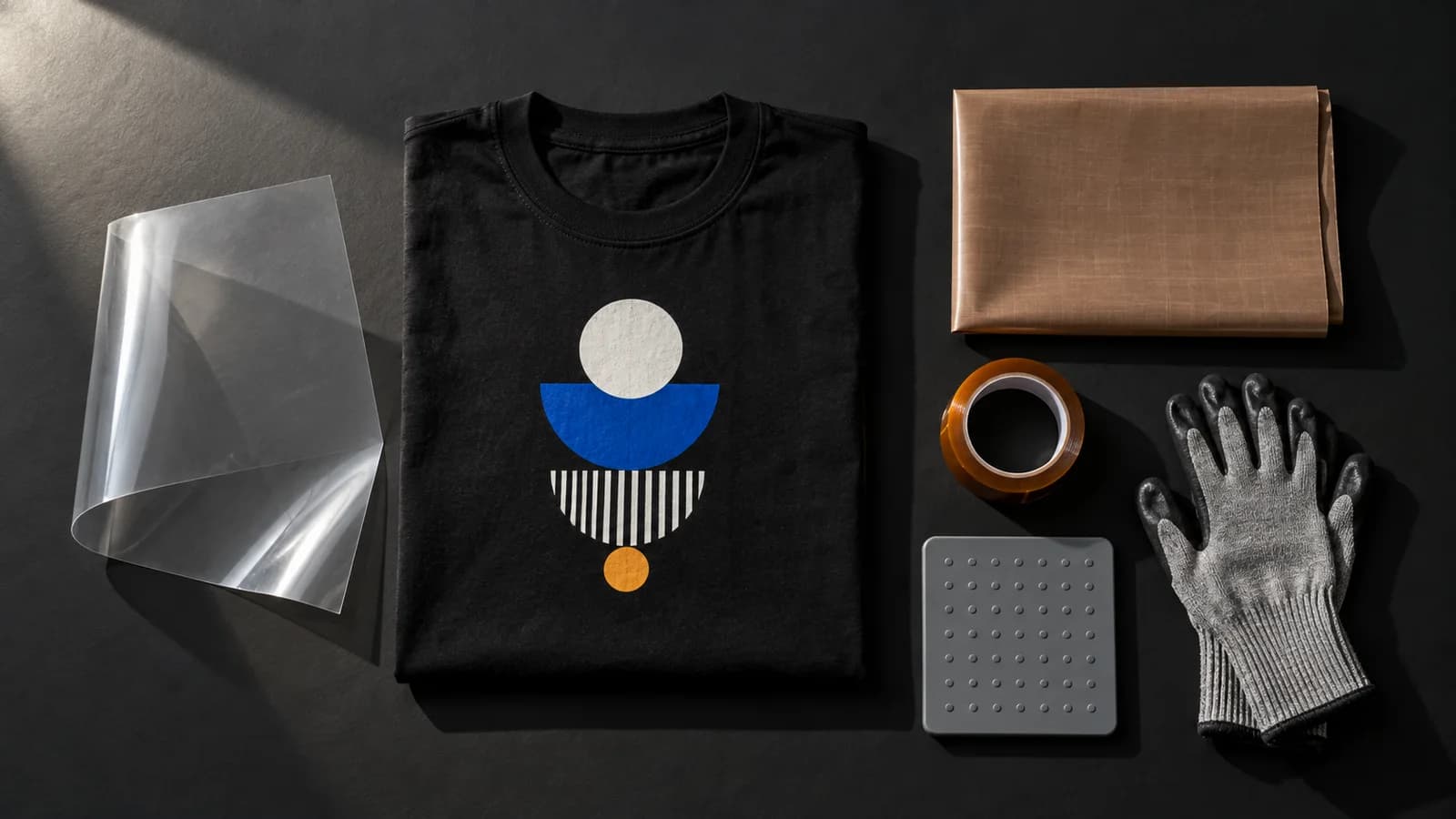
- Heat press (recommended) or a steam-free iron
- A firm, flat base, not a soft ironing board
- Silicone or PTFE paper to protect the design
- Optional: a thin cloth for the second press
Temperature, time and pressure by fabric
Our transfers are applied at 130 °C for 8 seconds with medium-high pressure: the film bonds fast and that's enough on every fabric. The only thing that changes from one fabric to another is the pressure.
- Cotton: 130 °C, 8 s, medium-high pressure
- Polyester and technical: 130 °C, 8 s, medium pressure
- Blends: 130 °C, 8 s, with a prior test
- Firm, even pressure, always without steam
Instant film peel
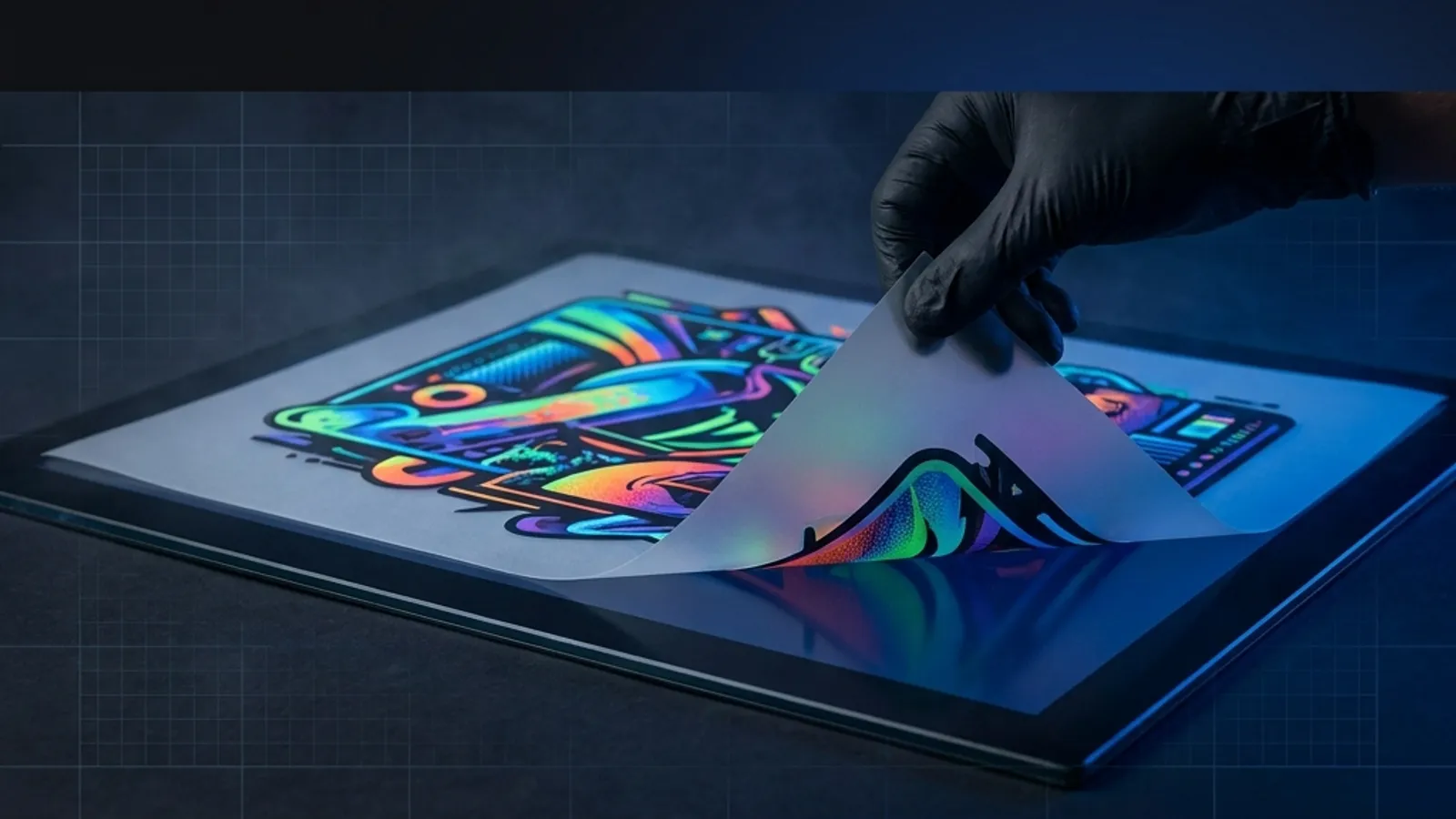
Peeling is removing the film once the design has transferred. Ours peels off hot, instantly: you open the press and pull it off right then, without waiting for the piece to cool.
Don't let it cool: it's made to come off on the spot. Pull in one continuous, firm movement; if an area lifts, press again for a few seconds and peel again.
Application by fabric and second press
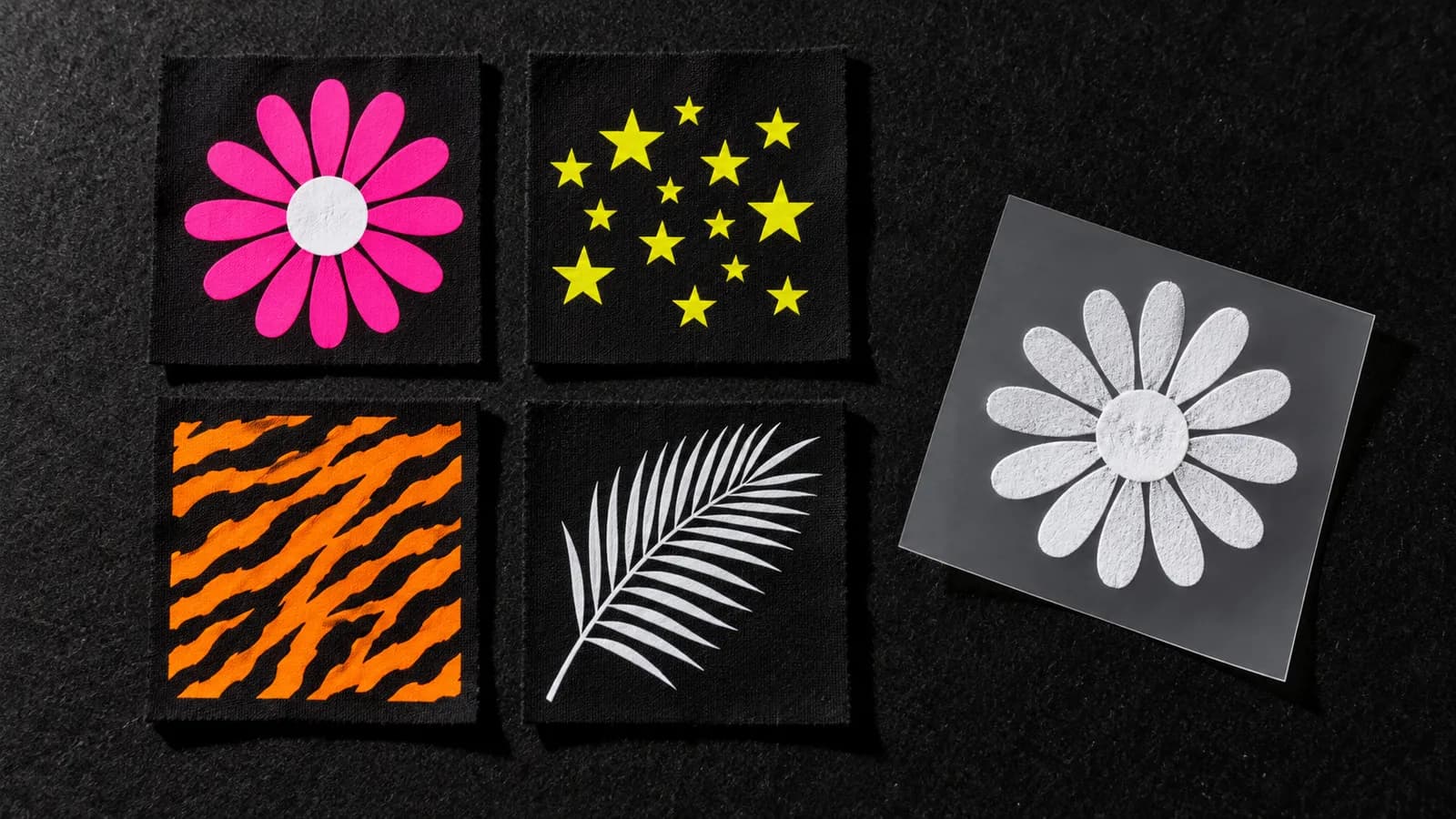
On cotton, DTF grips very well. On polyester and technical fabrics, don't go above 130 °C and ease off the pressure a little so you don't mark the garment. On dark garments it works just the same thanks to the white layer.
In every case a second press of about 5 seconds after removing the film helps, placing silicone paper or a thin cloth on top: it seals the ink and improves the feel and durability.
Mistakes that lift the design
Most lifting comes from too little pressure, too little heat or too short a time. Letting the film cool before peeling it, using steam or washing the garment before 24 hours also cause it. Always test on a scrap of the same fabric before a run.
- Insufficient pressure, temperature or time
- Letting the film cool before peeling it
- Using steam or washing before 24 h
- Not testing first on new fabrics
- Temperature
- 130 °C on every fabric
- Time
- 8 s
- Pressure
- Medium-high, even, no steam
- Film peel
- Instant, while hot
- Second press
- 5 s with silicone paper
- First wash
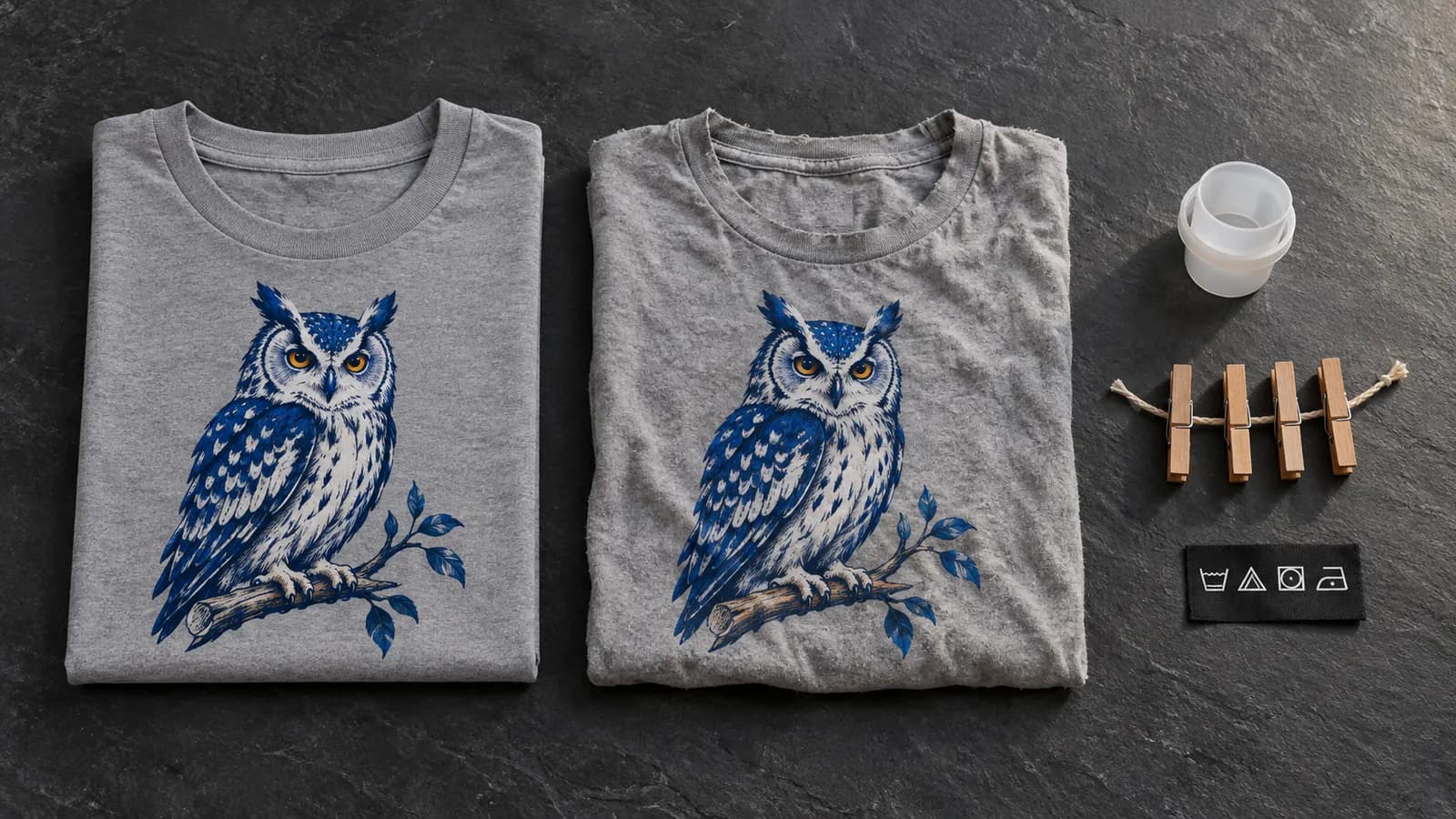
- After 24 h, inside out