Why DTF works on technical sportswear
Sports kits use technical fabrics (polyester, microfibre, stretch blends) that reject direct ink and warp under heat. DTF applies the design onto a PET film and transfers it with heat and pressure, so it bonds without saturating the fibre or blocking the fabric's breathability.
The result is a thin finish that stretches with the garment and survives training wear. Unlike cut vinyl, DTF needs no weeding of fine detail and sets no colour limit, so multi-tone crests or gradients come out in a single transfer.
- Bonds to polyester and technical stretch fabrics
- Full colour in a single transfer
- Doesn't block the garment's breathability
Crests and numbers: sizes and placement
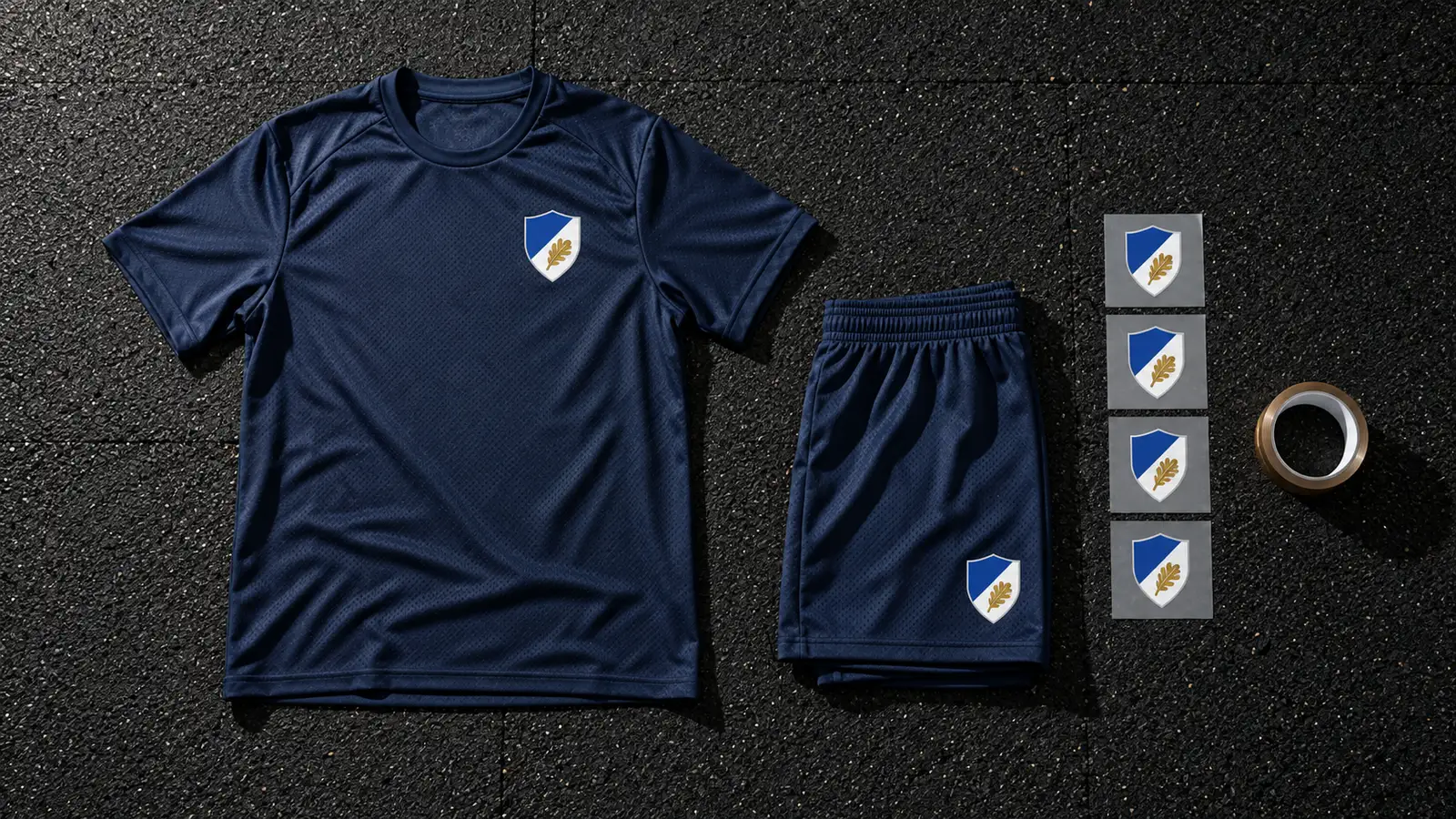
The club crest sits on the left chest, usually 7 to 10 cm wide; the main sponsor goes centre chest at 18-22 cm. The player name goes above the back number, with letters 5-7 cm tall.
The back number is typically 22 to 30 cm tall so it reads from a distance; a reduced 8-12 cm version goes on shorts or sleeve. We work with a 60 cm usable width, enough to gang several pieces into one transfer.
- Chest crest: 7-10 cm wide
- Back number: 22-30 cm tall
- Name above the number: 5-7 cm
Durability against washing, sweat and stretch
Properly applied, DTF survives more than 50 washes while keeping its colour and bond. Sweat and sports detergents don't lift the transfer if the press was correct and the film was peeled instantly, while hot.
The DTF elastomer follows the stretch of elastic fabric without cracking under normal use. To extend the print's life, wash inside out, cold and without an aggressive dryer.
- Over 50 washes when properly applied
- Resists sweat and sports detergents
- Stretches with the fabric without cracking
Technical fabrics: polyester, stretch and temperature
Polyester and many stretch fabrics are heat-sensitive: at high temperatures they shine, scorch or bleed colour. The key is to stay at 130 °C or below and use medium pressure.
As a guide, technical garments need nothing more than the usual 130 °C and 8 seconds; run a test on a hidden area before the full run. An anti-migration pad or a barrier film helps stop polyester dye from bleeding up into the print.
- Don't go above 130 °C
- Run a test before the full run
- Use an anti-migration barrier if needed
Full numbering: cost per kit and lead times
A typical kit carries crest, sponsor, name and number, plus the number on shorts: around 0.3-0.5 m of DTF per player depending on sizes. At €7/m ex VAT, the material for each kit comes to a few euros, on top of pressing.
Dispatch requires confirmed payment and all files approved before 12:00, subject to the workshop calendar and capacity. Carrier transit starts after dispatch.
- 0.3-0.5 m of DTF per player
- Material from a few euros per kit
- Dispatch requires confirmed payment and all files approved before 12:00, subject to the workshop calendar and capacity. Carrier transit starts after dispatch.
- DTF price
- €7/m ex VAT
- Usable width
- 60 cm
- Durability
- 50+ washes
- Back number
- 22-30 cm tall
- Per player
- 0.3-0.5 m
- Lead time
- After payment and file approval