How each technique charges
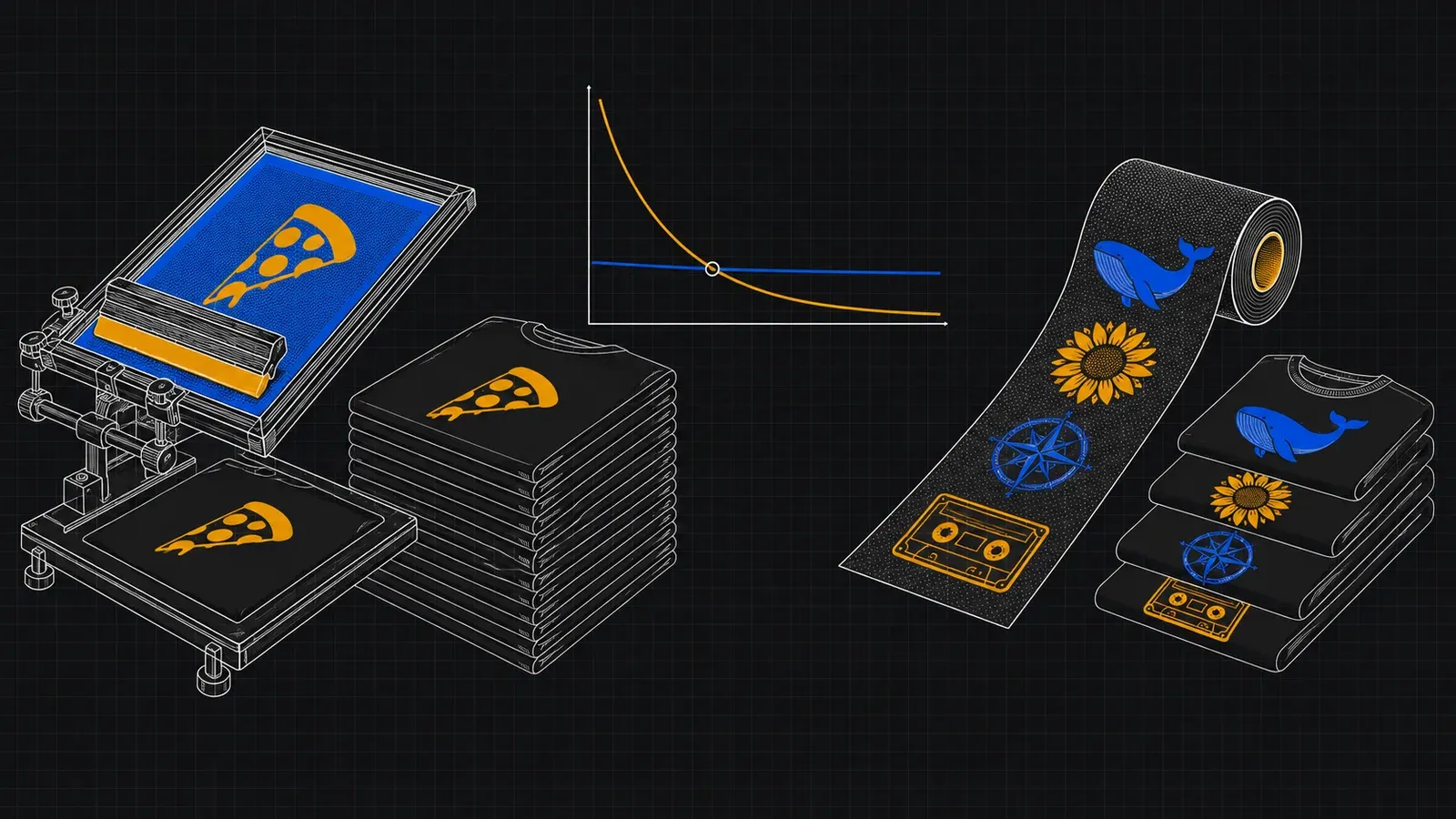
Screen printing has a fixed setup cost: you have to burn one screen per colour in the design. That cost is spread across every garment in the order, so the larger the run, the less it weighs per unit. That's why screen printing is very expensive for one unit and very cheap for a thousand.
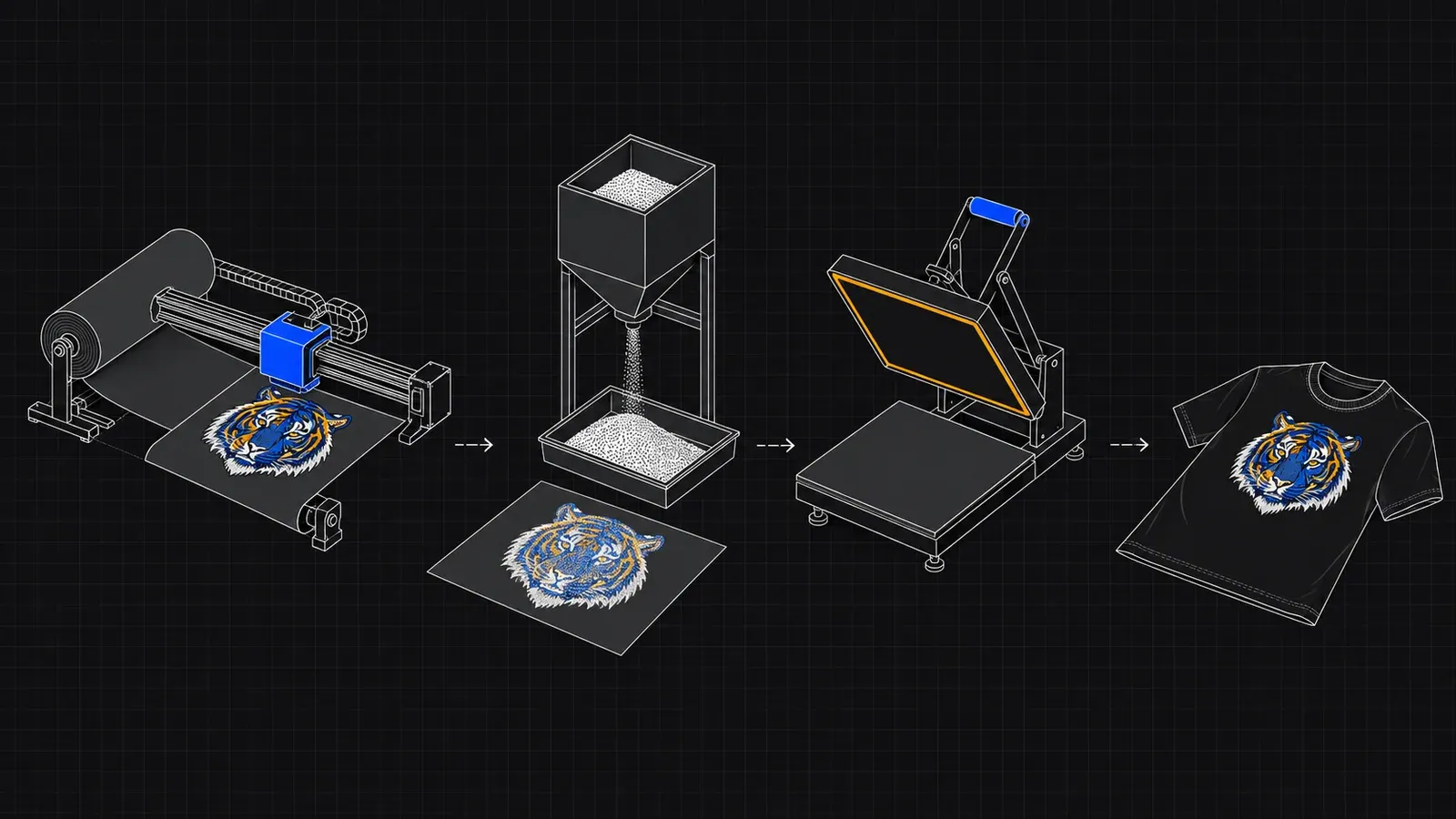
DTF uses no screens: it's printed onto PET film and charged per printed metre (at DTF.pro, €7/m ex VAT with a 60 cm usable width). There's no setup cost and no colour penalty, so the price per garment is almost the same whether you order 5 or 50. What counts is how much film your design takes up.
- Screen printing: one screen per colour, a fixed cost diluted by quantity.
- DTF: no screens, you pay per metre of printed film.
- With DTF the cost per unit barely changes with the run size.
The break-even point by colours and units
Break-even depends on two variables: how many colours the design has and how many garments you order. Each colour adds a screen in screen printing, and each screen is an extra fixed cost. A one-colour design matches screen printing sooner; a six-colour design pushes the break-even point much higher in quantity.
The practical rule: below around 30-50 units, DTF almost always wins, especially with several colours. Above a few hundred garments in few colours, screen printing starts to come out cheaper per unit. In between, run the numbers with your specific design before deciding.
- More colours in the design raise the screen printing cost.
- More units dilute the fixed cost of the screens.
- Calculate with your real design: colours × screens vs metres of film.
DTF wins on small, multicolour runs
On short runs DTF has no rival: with no screens to amortise, a full-colour shirt costs the same per unit whether you make one or twenty. It's the option for samples, prototypes, name-personalised clothing, event merch or small on-demand restocks.
Besides, the number of colours makes no difference: a full-colour photo or a gradient prints at the same price as a one-colour logo. In screen printing that would mean many screens and an expensive setup that only pays off at large quantities.
- No setup cost: one unit comes out at a good price.
- Multicolour, photos and gradients with no surcharge.
- Ideal for samples, personalisation and on-demand work.
Screen printing wins on very large, few-colour runs
When we're talking hundreds or thousands of garments with a one or two-colour design, screen printing is hard to beat on cost per unit. The screen is already paid for and each extra garment costs very little ink and labour, so the unit price drops a lot.
It's the classic ground of the one-colour corporate shirt, the club uniform or the mass merch run with a simple logo. If your order is large and the design has few colours, ask for a screen printing quote and compare it with DTF before closing.
- Few colours + large quantity = very low unit cost.
- The screen is amortised and the extra garment is cheap.
- Get a quote and compare with DTF before deciding.
Quality, feel, durability and lead times
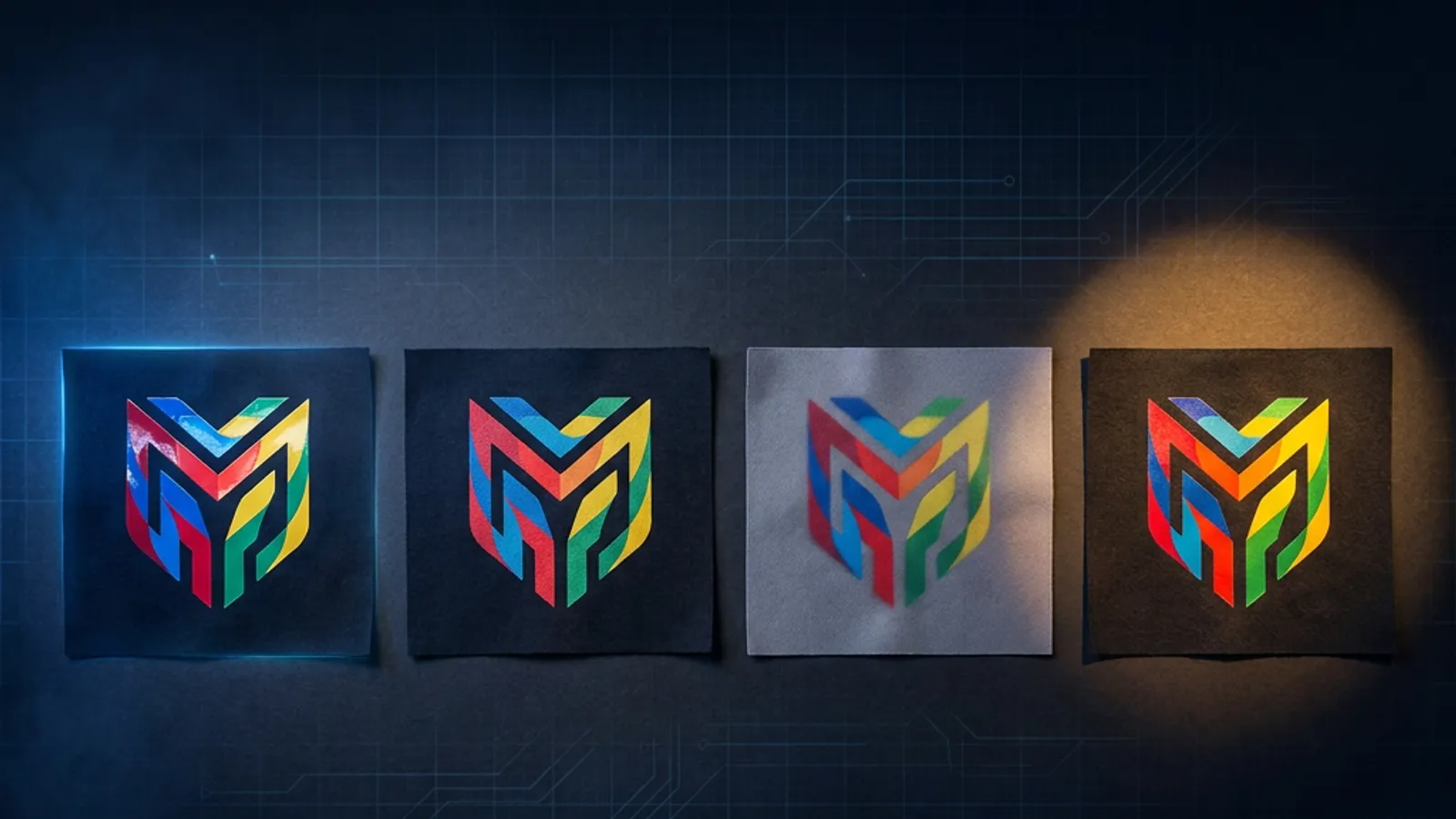
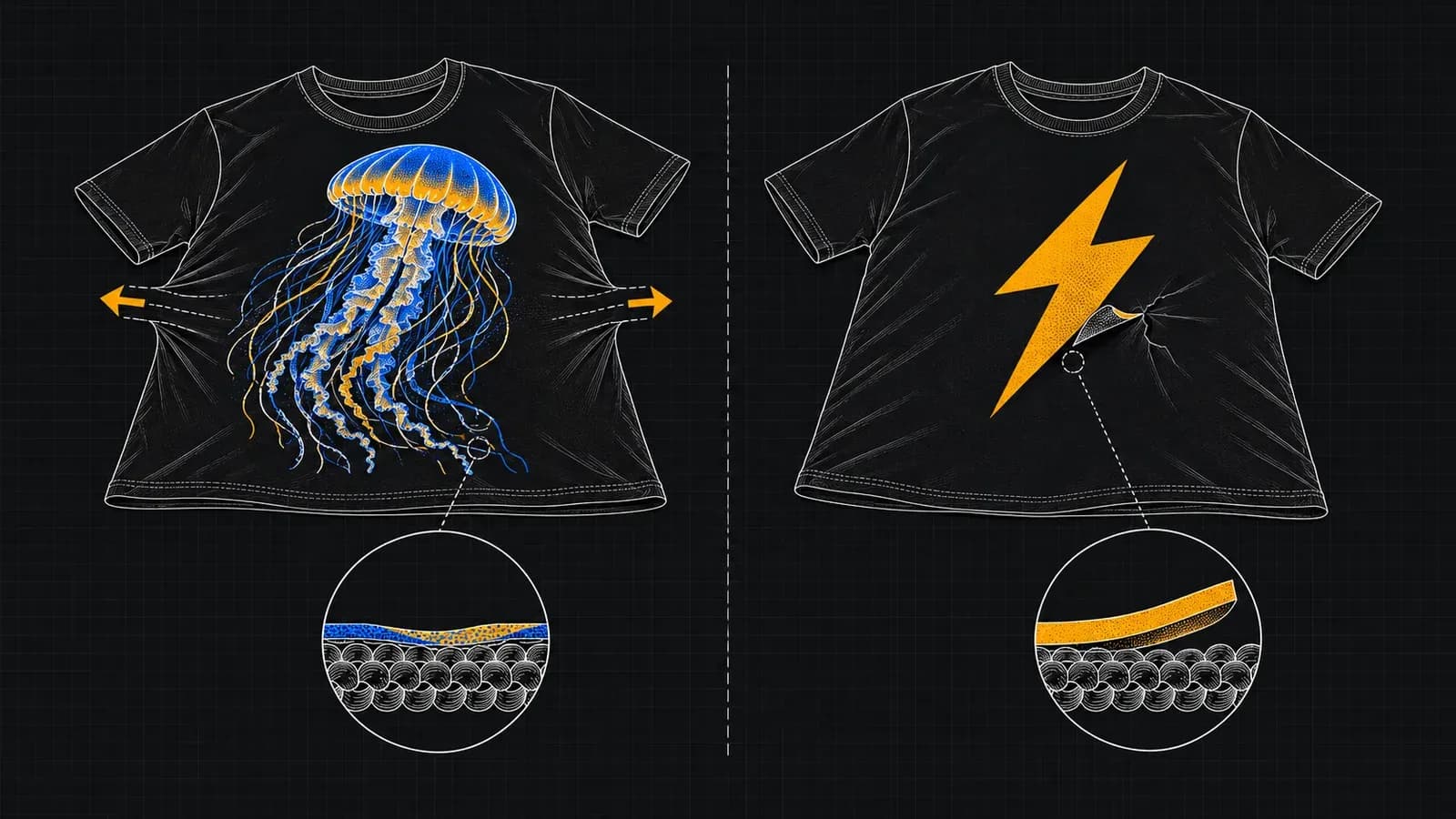
On quality both techniques hold up well when applied correctly. DTF withstands 50+ washes when well applied, reproduces photos and gradients in detail and sits slightly on top of the fabric. One-colour screen printing on cotton can give a more integrated feel, but it loses fluency with many colours.
Dispatch requires confirmed payment and all files approved before 12:00, subject to the workshop calendar and capacity. Carrier transit starts after dispatch.
- DTF: 50+ washes, photos and gradients in detail.
- Screen printing: very solid in few colours and large runs.
- Dispatch requires confirmed payment and all files approved before 12:00, subject to the workshop calendar and capacity. Carrier transit starts after dispatch.
- DTF price
- €7/m ex VAT
- Usable width
- 60 cm
- DTF setup cost
- €0 (no screens)
- DTF colours
- No surcharge, full colour
- DTF durability
- 50+ washes well applied
- DTF lead time
- After payment and file approval