Two philosophies: ink that sticks vs ink that becomes fabric
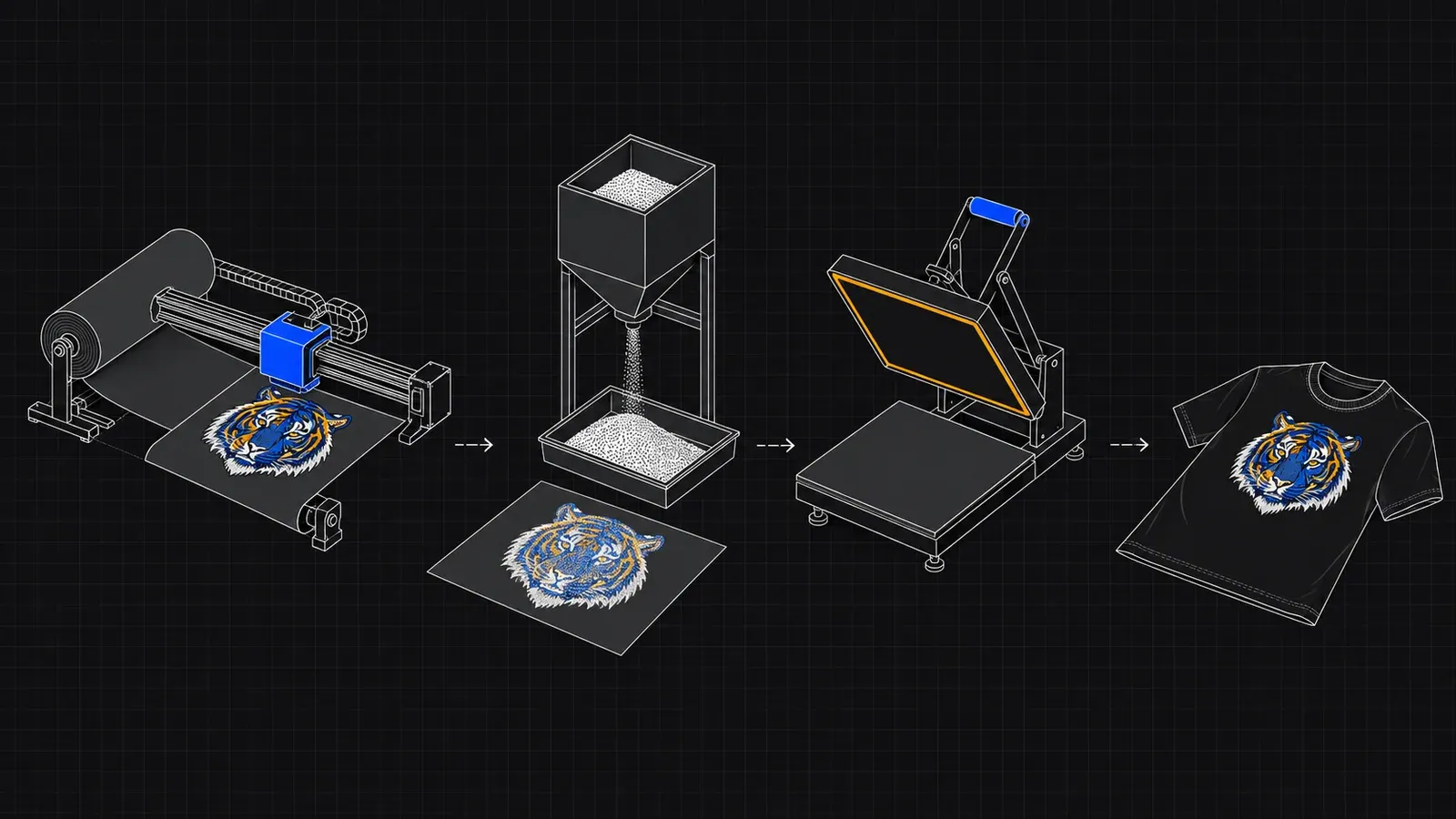
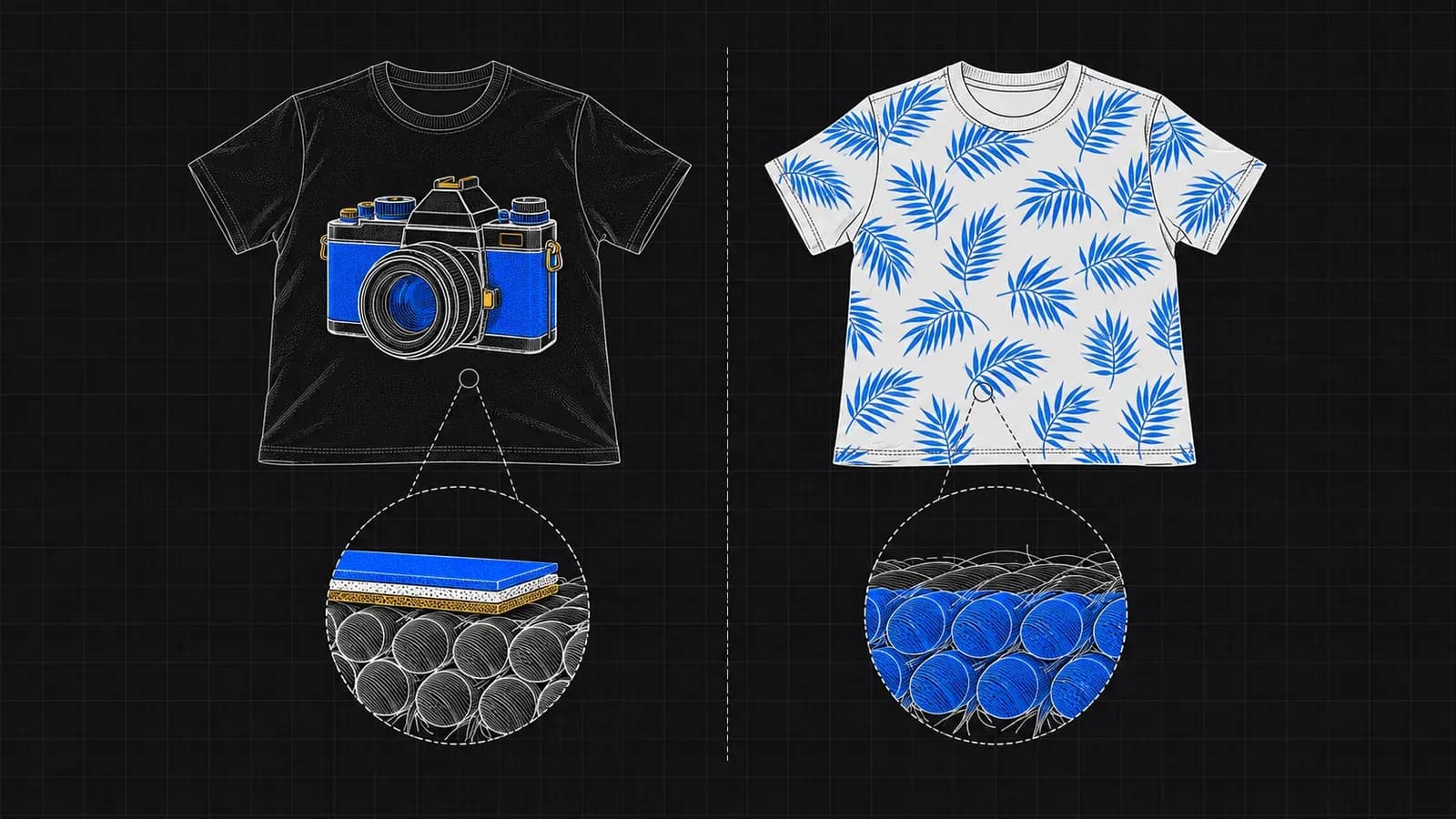
DTF prints the design on a film and welds it to the garment with polyamide adhesive: the transfer is an ultra-thin layer ON the fabric. Sublimation prints on paper and, with heat, turns the ink into a gas that penetrates and dyes the fibre itself: the design ends up INSIDE the fabric.
Everything else flows from that difference: sublimation can't be felt (it's the dyed fabric itself) but only works where it can dye; DTF adds a layer (a thin hand, but it's there) and in return grips almost any material.
The limitation that decides 80 % of cases
Sublimation ONLY dyes polyester (or polymer coatings) and ONLY shows on light backgrounds: the ink is transparent, there is no white, and on a dark garment it simply doesn't show. A white technical polyester tee: perfect. A black cotton tee: impossible, on two counts.
DTF has no such boundary: cotton, polyester, blends, lycra, denim, and the garment colour doesn't matter because it carries its own white base. It's the 'do-it-all' technique, and that's why it's the one we offer as a service by the metre.
Feel, colour and durability compared
Feel: sublimation wins — zero relief, the garment feels untouched. Modern DTF with thin film stays flexible and pleasant, but a hand over the design notices it. Colour: sublimation shines on photographs over white; DTF gives denser, more saturated colours on any background, with whites impossible for sublimation.
Durability: a tie with nuances. Sublimation can't crack or peel (it's the fabric) but can fade under intense sun; well-applied DTF withstands 50+ washes and its risk is bad pressing. Under extreme rubbing (backpacks, seats) sublimation tolerates abrasion better.
- Light polyester + full-colour photo → sublimation.
- Cotton, dark garments or blends → DTF.
- Mugs, mousepads and coated rigid items → sublimation.
- Varied textile merch for many clients → DTF.
The real costs of each route
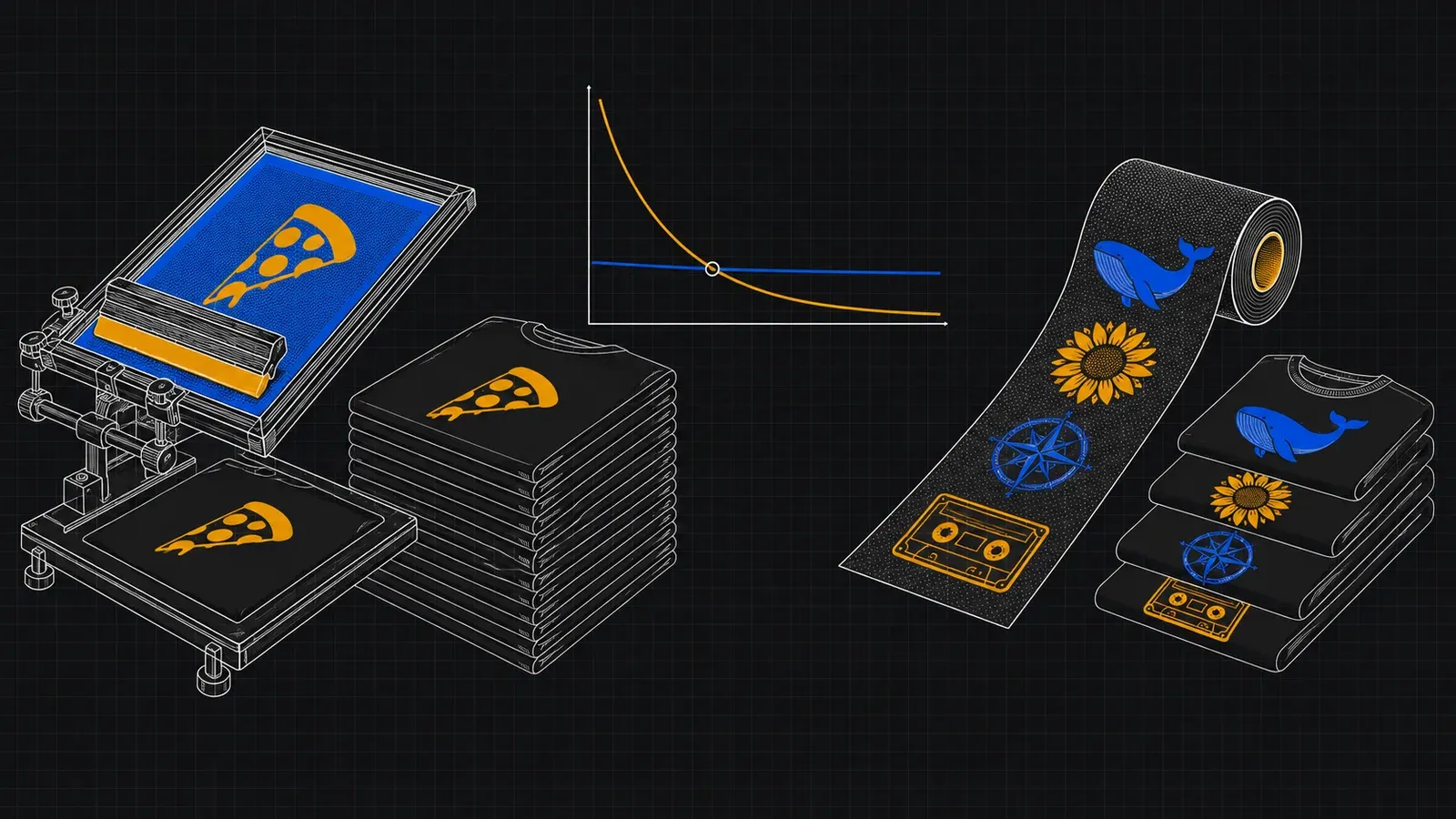
Setting up sublimation is cheap (printer + inks + paper + press) but chains you to the catalogue of 'sublimatable' garments: light polyester, specific qualities, specific suppliers. Setting up your own DTF is expensive (specialised printer, oven, powder, serious maintenance); buying it as a service isn't: €7/m ex VAT and you apply it with your own press.
For a personalisation business, the hybrid wins: sublimate whatever is light polyester with your own kit if you already have it, and order DTF by the metre for everything else — cotton, dark, many clients. Each technique on its own turf, zero duplicated investment.
The borderline cases, resolved
A DARK polyester sports shirt: DTF (sublimation won't show), applied at a lower temperature so the polyester doesn't migrate colour — read our guide to DTF on polyester. 50/50 blends: DTF; sublimation would only dye half the fibres and come out washed-out. A white cotton garment with a photograph: DTF, cotton doesn't sublimate.
Bottles, mugs and rigid items: sublimation if they have a coating; for glass, metal or uncoated wood, our UV stickers (DTF UV) do that job — same DTF logic, adhesive instead of heat.
- Sublimation
- Dyes the fibre · light polyester only
- DTF
- Bonded layer · almost any fabric and colour
- White
- DTF yes (white base) · sublimation none
- Feel
- Sublimation: none · DTF: thin and flexible
- DTF durability
- 50+ washes at 30 °C well applied
- DTF as a service
- After payment and file approval