How each technique works
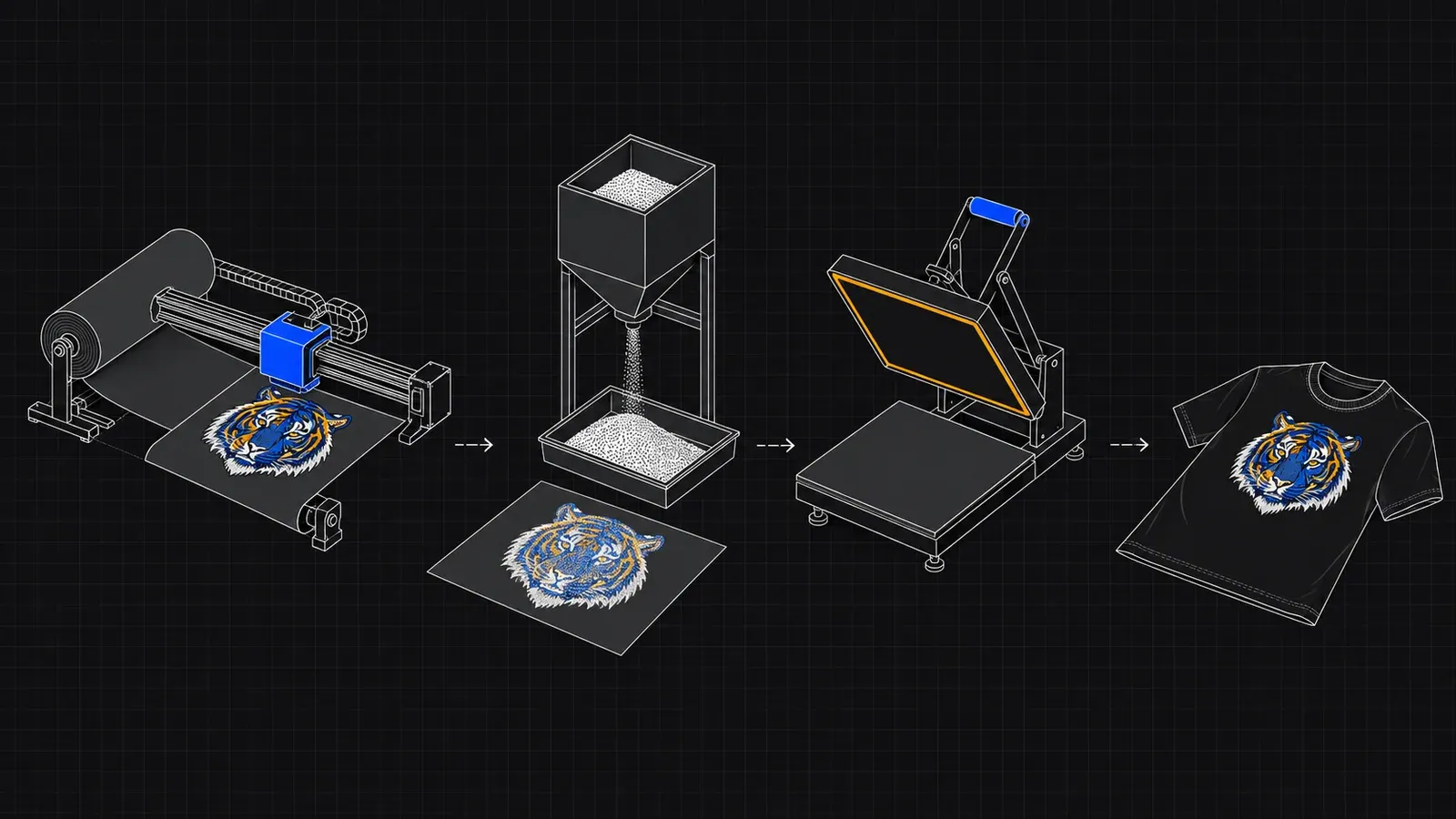
Cut vinyl starts from a single-colour sheet. A plotter cuts the design outline, you weed out the excess, and you heat-press it onto the garment. Every extra colour means another sheet and another press, so the method shines with simple, single-colour shapes.
DTF prints the full design in CMYK onto a PET film, adds a layer of adhesive powder and bonds it with heat. There are no contours to cut or colours to separate: what you see in the PNG is what gets transferred, gradients and photography included.
- Vinyl: cut per colour, no printing
- DTF: direct CMYK printing onto PET
- DTF transfers the full design with no weeding
Fine detail and full colour
Here DTF has a clear edge. By printing, it reproduces fine lines, small text, gradients, shadows and photography with no cost per colour. A six-ink logo or a full-colour illustration comes out in a single transfer.
Vinyl has a physical limit: each colour is a cut layer, and very fine detail is lost during weeding. For true multicolour or images, stacking vinyl raises cost, adds thickness and complicates registration between layers.
- DTF: gradients and photography with no cost per colour
- Vinyl: fine detail lost in weeding
- Multicolour logos: one DTF transfer is enough
Hand feel and weight on the garment
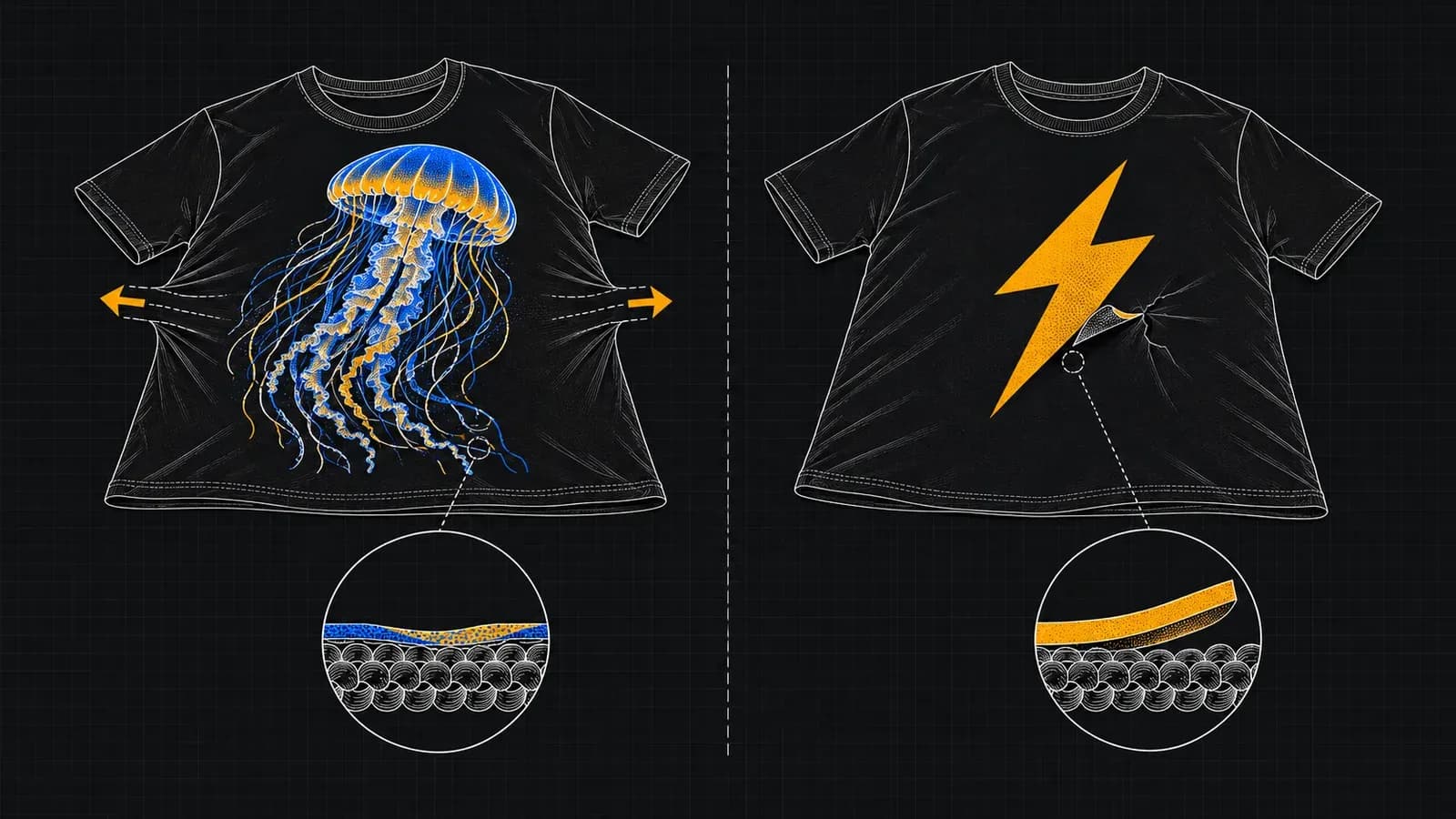
DTF lays down a thin, flexible layer that follows the fabric; on small and medium designs it is barely noticeable. On cotton, blends or polyester it keeps a uniform finish without stiffening the printed area.
Cut vinyl tends to be more noticeable, especially when several layers are stacked to achieve multiple colours. In a single colour and large shapes the result is good; as layers add up, it gains thickness and stiffness.
- DTF: thin, flexible layer that follows the fabric
- Single-colour vinyl: a fine hand feel
- Several vinyl layers: more thickness and stiffness
Durability and washes
Properly applied, DTF withstands 50+ washes keeping colour and adhesion, thanks to the adhesive that penetrates the fibre. The key is the press: correct temperature, time and pressure, plus washing inside out and avoiding an aggressive dryer.
Quality vinyl also lasts many washes in a single colour, but in multi-layer designs the edges and joins are the weak point. With use, stacked layers can lift earlier than a continuous DTF transfer.
- DTF: 50+ washes when properly applied
- Single-colour vinyl: good resistance
- Stacked layers: edges that lift sooner
Cost per garment and run size
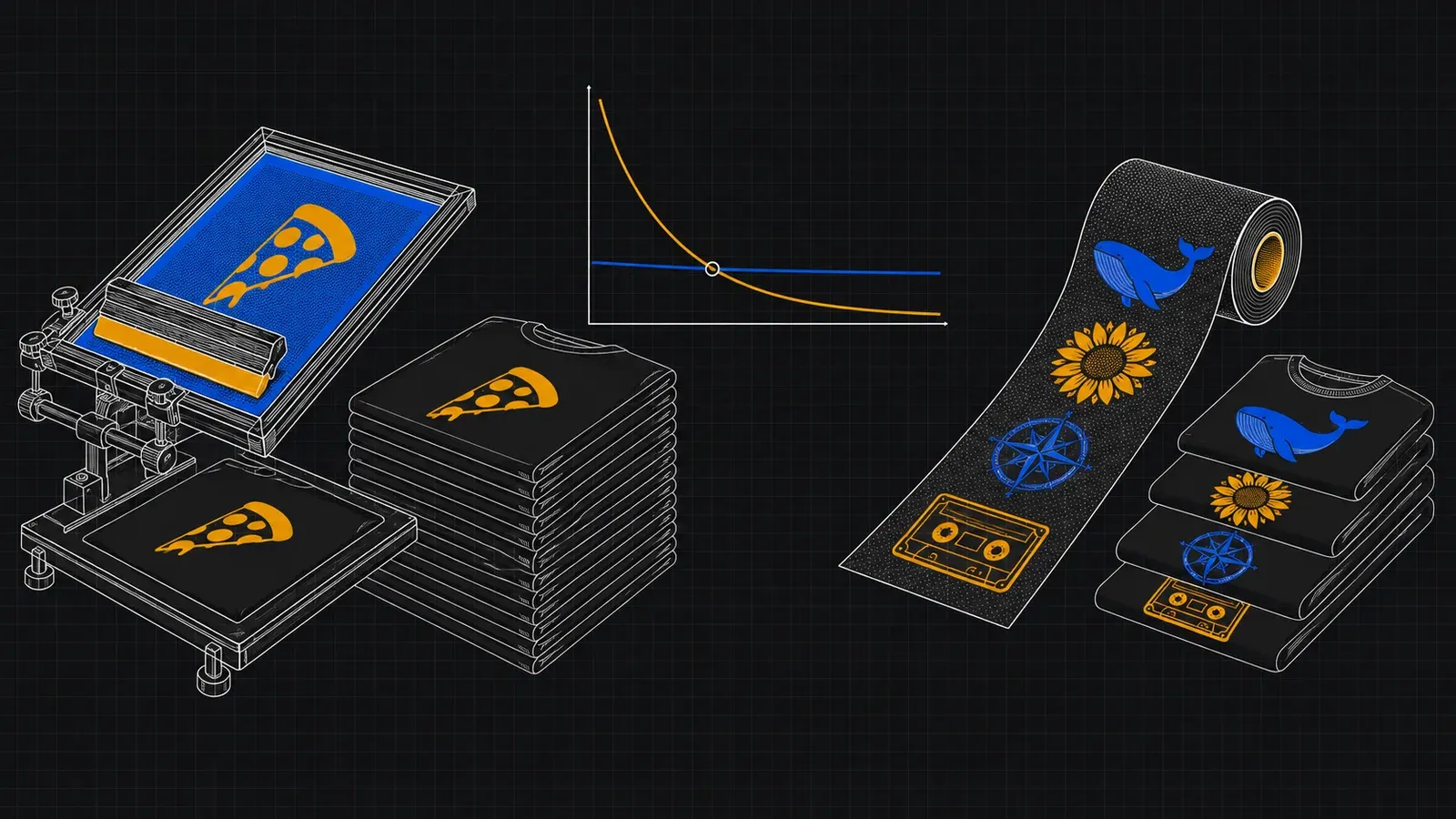
For single-colour text on a few garments, cut vinyl is still competitive: you need no printing and the material is cheap. It is the logical choice for numbered backs, names or a simple symbol.
As soon as several colours, detail or photography come in, vinyl cost climbs due to layers and weeding time. DTF at €7/m ex VAT (60 cm usable width) keeps a flat price per metre no matter how many colours the design carries.
- Vinyl: cheap in one colour and low quantity
- DTF: flat price per metre, no cost per colour
- Multicolour or photo: DTF pays off sooner
- DTF price
- €7/m ex VAT
- Usable width
- 60 cm
- Durability
- 50+ washes
- Colour
- CMYK, no cost per colour
- Cut vinyl
- Best in a single colour
- Ideal file
- PNG with transparent background