What DTF film is and the role it plays
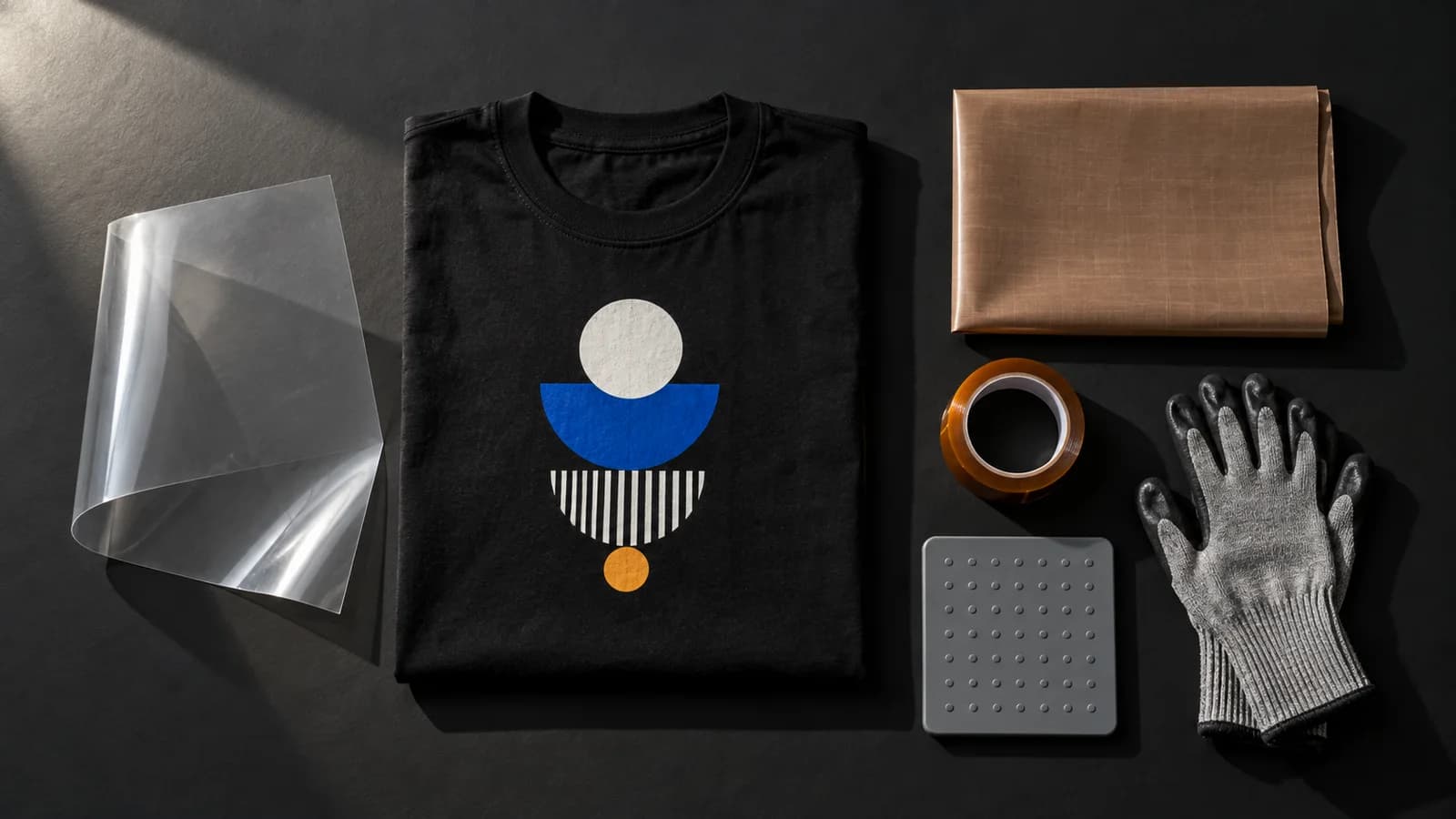
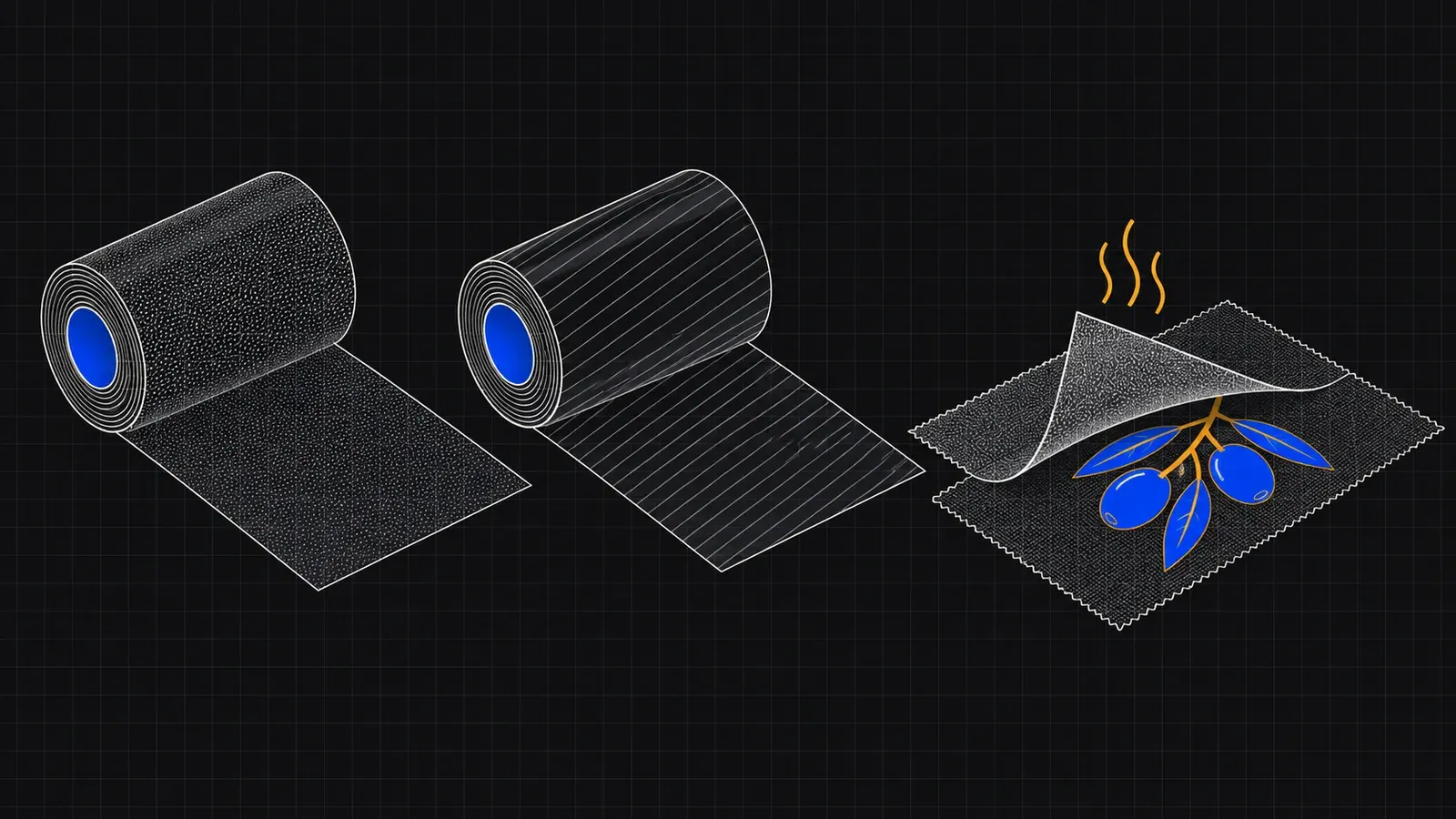
DTF film is a sheet of PET (polyester) with a special coating that holds the ink during printing and releases it cleanly on transfer. It's a single-use consumable: print, transfer, bin it — but its quality shapes everything that happens in between.
A cheap film releases the ink only partly (incomplete transfers), curls in the oven heat or leaves uneven sheen. A good film gives crisp edges, dense colour and a smooth peel with no scares.
Thickness: it's not about the number
DTF films are sold in different thicknesses. Thinner films are cheaper and more flexible, but curl more in the oven and handle worse on large gang sheets; thick ones take everything but cost more and transmit heat less well.
That's why we don't choose our film by a number but by how it performs: stable on a 60 cm roll and on gang sheets up to 5 m, with a clean transfer and an instant hot peel the moment you've pressed.
Matte or gloss, and how it peels
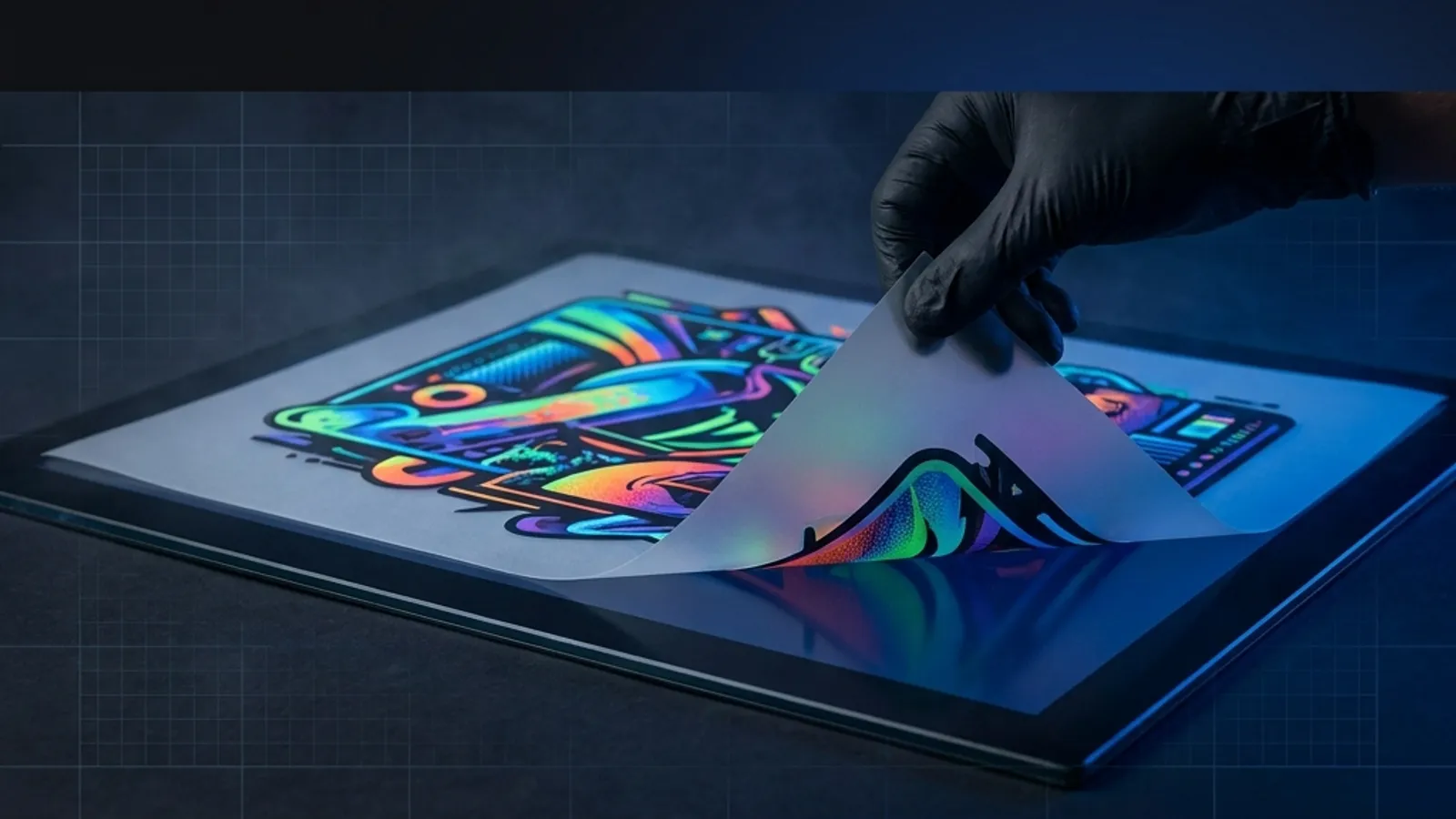
The film finish influences the transfer finish: matte film leaves a more understated result and hides press marks and sheen; gloss makes colours look more vivid but shows every pressing flaw. For textiles, matte is the professional standard.
The peel (removing the film after pressing) can be cold, waiting for the piece to cool, or hot, instantly. Ours peels hot only, instantly: you open the press and pull it off right then, with no waiting.
- Matte with instant peel: what you get from DTF.pro.
- Pressing: 130 °C for 8 seconds.
- Hot peel the moment you open the press, without waiting for it to cool.
Special films: when they make sense
There are effect films — glitter, metallic, glow-in-the-dark, holographic — that bring finishes impossible with ink. They work, but they change the rules: they usually demand specific temperatures, their wash durability is lower than standard DTF and the cost per metre rises.
Our honest recommendation: save them for accents and special editions, not the everyday logo. If your project needs them, write to us and we'll tell you what's feasible and with what realistic durability.
How to store printed DTF
A printed transfer is stable for months if stored well: flat or on its roll, away from heat (no cars in the sun or radiators) and from damp, ideally in its packaging. The polyamide is hot-melt: premature heat is its only real enemy.
We ship gang sheets rolled and protected for exactly this reason. If you order extra for restocks, keep the roll in a cool drawer and you'll have transfers ready to press for 6-12 months with no appreciable loss.
- Material
- PET with a release coating
- Our film
- Matte, double-sided
- Peel
- Instant, while hot
- Roll width
- 60 cm usable (56 cm on UV)
- Printed transfer life
- 6-12 months well stored
- Enemies of printed film
- Prolonged heat and damp