Why polyester is sensitive to heat
Polyester is a synthetic fiber that softens and deforms at much lower temperatures than cotton. A press that is too hot causes shine, platen marks and, in extreme cases, the garment scorches irreversibly.
Technical sportswear is usually a thin blend with treatments and membranes. That finish suffers most from heat, so the margin for error is small and it pays to work with controlled settings.
- Sensitive synthetic fiber: it softens before cotton does.
- Risk of shine and press platen marks.
- Membranes and technical treatments degrade at high heat.
Recommended temperature and time
With our transfers there's no separate recipe for polyester: they're applied at 130 °C, the same temperature as on cotton, with medium pressure rather than firm.
The time is short: 8 seconds is enough, because the film bonds fast. If the transfer does not fully set, a brief second press is better than one long press at higher heat.
- Temperature: 130 °C, the same as on cotton.
- Short time: 8 seconds per press.
- Medium pressure; a brief re-press beats raising the heat.
Color migration (bleeding)
Migration or sublimation is the main enemy on polyester: heat activates the garment dyes, which rise and stain the DTF. A typical case is white turning pink on a red or maroon shirt.
The risk grows with temperature, time and intense fabric colors. Lowering the degrees, shortening the time and using low-temperature films reduces bleeding, though on very saturated colors it is best confirmed with a test.
- Heat activates fabric dyes, which stain the DTF.
- More likely on reds, maroons and very saturated colors.
- Fewer degrees and less time reduce bleeding.
Low-temperature pressing step by step
Set the press to 130 °C and medium pressure. Place the garment, do a pre-press of a couple of seconds to remove moisture and wrinkles, and position the transfer with the printed side toward the fabric.
Press for 8 seconds, peel the film instantly while hot, and if needed give a brief second press with silicone paper or Teflon on top to protect the finish.
- Pre-press of 2 seconds to remove moisture.
- Main press of 8 seconds at 130 °C.
- Protect with silicone paper or Teflon when re-pressing.
Sportswear, waterproofs and a test run
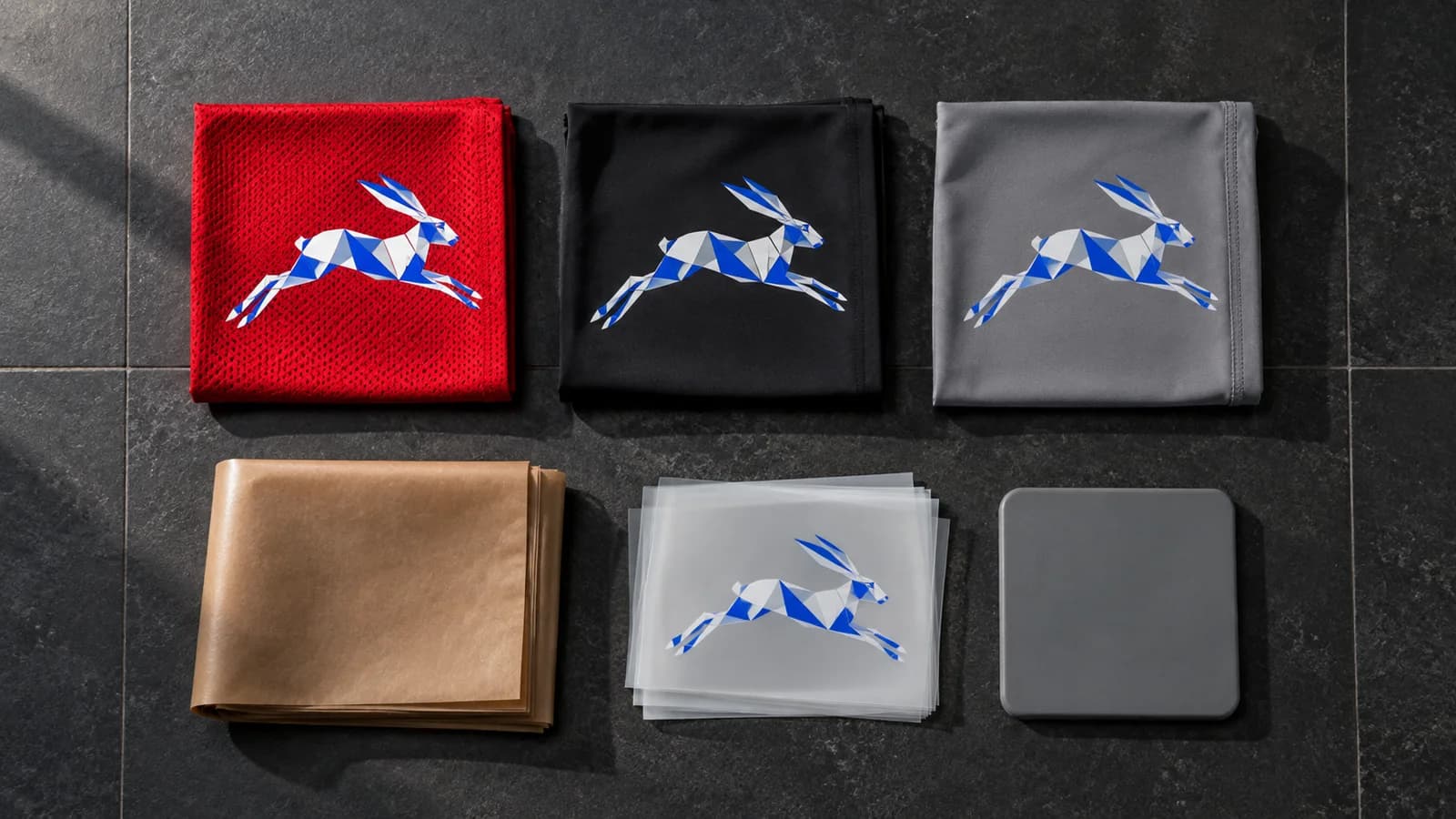
Sportswear and waterproof garments add stretch, membranes and water repellency that react badly to excess heat. On these fabrics low-temperature DTF is the safe choice, and long or very hot presses should be avoided.
So before running a large batch, ask for a sample and test on the same garment or an offcut. Adjusting temperature, time and pressure on one piece avoids ruining a whole order.
- Sportswear and waterproofs: prioritize low-temperature DTF.
- Always test on the real garment or a matching offcut.
- A test run first prevents ruining a whole batch.
- Polyester temperature
- 130 °C
- Cotton temperature
- 130 °C
- Press time
- 8 s
- Pressure
- Medium
- Main risk
- Color migration
- Before running
- Order a sample and test